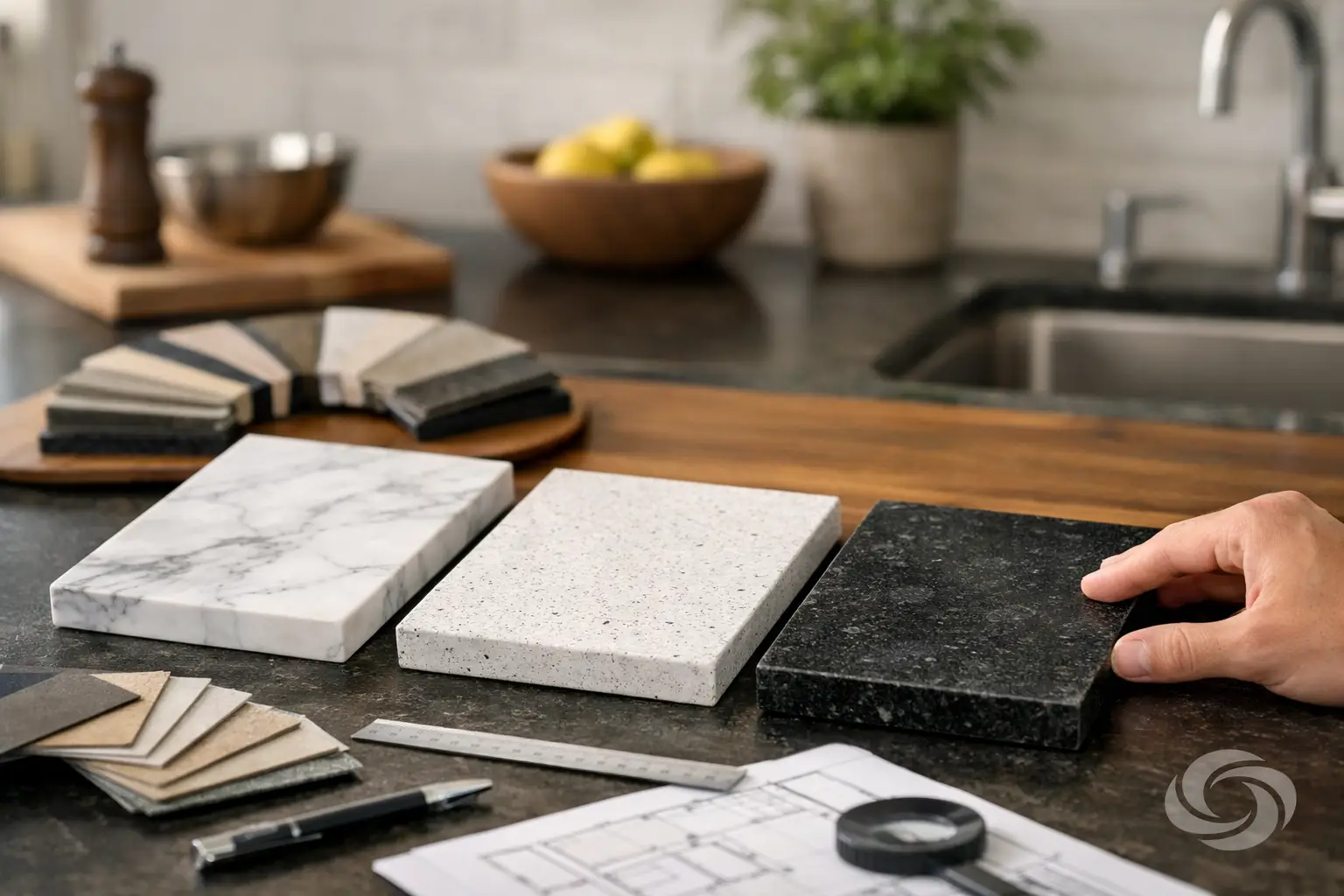
A countertop is where a kitchen renovation becomes real. Cabinet doors may set the overall style, but the counter is the surface you prepare meals on, set groceries on, wipe down after dinner, and see every morning. Knowing how to choose countertops means looking beyond a showroom sample and choosing a material that fits how your household actually uses the kitchen.
The right choice is rarely just the most expensive material or the trendiest color. It is the surface that works with your cabinetry, holds up to daily use, stays within a clear budget, and can be installed precisely as part of the larger kitchen plan.
Start With How You Use the Kitchen
Before comparing materials, think about the pressure your countertops will face. A kitchen used for quick breakfasts and takeout has different needs than one used for daily cooking, baking, entertaining, or feeding a busy family. There is no one best countertop for every home.
If you regularly chop, cook, and place hot pans near the range, durability and heat resistance should carry more weight. If your priority is a polished look with simple day-to-day care, a low-maintenance engineered surface may be a better fit. For rental units, multi-unit properties, or commercial spaces, predictable cost and easy replacement can matter as much as appearance.
Also consider who will use the space. Young children, pets, frequent guests, and enthusiastic home cooks can all influence the practical choice. A surface that requires careful sealing or quick cleanup may be worthwhile for one homeowner and frustrating for another.
Set a Full Countertop Budget, Not Just a Material Budget
Countertop pricing is more than the cost per square foot. The final investment can also include measuring, fabrication, delivery, installation, sink and cooktop cutouts, edge profiles, seams, backsplash pieces, demolition of existing counters, and plumbing reconnection where needed.
An island can change the budget quickly, especially if you want a single large slab or a waterfall edge that continues the material down both sides. A thicker-looking profile, rounded corners, or a full-height backsplash can create a high-end finish, but each adds fabrication and material costs.
A clear renovation plan helps avoid surprises. Decide where the countertop deserves the larger share of the budget and where a simpler choice makes sense. For example, homeowners may select a premium material for a kitchen island that is always visible, then use a coordinating, more economical surface in a laundry room, pantry, or secondary prep area.
Compare Countertop Materials by Real-World Trade-Offs
Every material has strengths. The goal is not to find a surface with no limitations, but to choose limitations you can comfortably live with.
Quartz for Consistent Style and Easy Care
Quartz is an engineered stone surface valued for its consistent color, wide design range, and low-maintenance finish. It can provide the look of marble, concrete, or natural stone without requiring routine sealing. For many active households, that combination makes quartz a practical choice.
Quartz is durable, but it is not indestructible. Use trivets for hot cookware, as extreme heat can damage the resin within the material. It also performs best with basic daily cleaning rather than harsh chemicals or abrasive pads. If you want a refined, uniform appearance and straightforward upkeep, quartz is often worth considering.
Granite for Natural Variation
Granite brings genuine movement and variation that cannot be duplicated exactly. Each slab is different, which can make a kitchen feel more individual and connected to natural materials. It is a strong option for homeowners who appreciate character rather than a perfectly uniform pattern.
The trade-off is maintenance. Granite generally needs sealing to help protect against staining, and the level of variation means you should select the actual slab whenever possible. A small sample may not show the veining, color shifts, or darker mineral deposits that appear across a full countertop.
Marble for a Statement Surface
Marble has a distinctive, classic appearance, especially in kitchens with traditional, transitional, or European-inspired cabinetry. Its soft veining and natural depth can make an island or baking area feel special.
It also requires realistic expectations. Marble is more porous and softer than many other stone options, so it can etch, stain, or develop marks from acidic foods and everyday use. Some homeowners enjoy the lived-in patina. Others prefer a material that stays more visually consistent. Marble works best when its beauty matters more than a flawless finish over time.
Laminate for Budget Control and Design Flexibility
Modern laminate is not limited to the looks many homeowners remember from older kitchens. It is available in convincing stone, wood, and solid-color patterns, often at a lower cost than natural or engineered stone. It can be a smart option for a rental property, a quick refresh, or a renovation where cabinetry and storage improvements take priority.
Laminate is easier to damage with knives, excessive heat, and standing water at seams. Careful installation and realistic use habits matter. Still, when selected well, it can create a clean, attractive kitchen while keeping the project budget controlled.
Porcelain and Sintered Stone for Heat Resistance
Porcelain and sintered stone surfaces are increasingly considered for their heat resistance, durability, and contemporary appearance. Many designs offer large-format slabs with subtle veining or matte finishes that work well in modern kitchens.
Fabrication and installation require experienced handling, particularly around cutouts and edges. Availability, slab sizes, and installer expertise can affect the final cost. These materials are worth discussing if heat performance and a sleek, architectural look are priorities.
Choose a Color That Works With Cabinets and Light
Countertops should support the entire room rather than compete with every finish. Bring cabinet samples, flooring samples, backsplash ideas, and paint colors when reviewing slabs. A countertop that looks warm in a showroom may read cooler under your kitchen lighting, while a bright white surface can emphasize warm tones in nearby cabinets.
For kitchens with richly grained wood cabinetry or bold cabinet colors, a quieter countertop can create balance. With simple white, greige, or light oak cabinets, a countertop with gentle veining can add visual depth without making the room feel busy. In a smaller kitchen, lighter surfaces can help reflect light, although a darker countertop can still work beautifully when paired with enough lighting and contrast.
Pay close attention to the sample size. A small quartz or stone sample may show only one section of a pattern. Viewing a larger piece, or the selected slab itself, gives you a more accurate sense of movement, scale, and color variation.
Do Not Treat Edges, Seams, and Overhangs as Small Details
The fabrication details often determine whether a countertop looks polished after installation. A simple eased edge is clean, durable, and easy to maintain. More decorative profiles can suit traditional kitchens, but they may collect crumbs or add cost without improving daily function.
Seams are another planning issue, particularly with long runs, L-shaped layouts, and large islands. A skilled fabricator places seams thoughtfully, but they cannot always be eliminated. Material pattern, slab size, and kitchen layout all influence where they appear.
For islands and peninsula seating, confirm the overhang before fabrication. A shallow overhang can feel cramped, while a larger one may require proper support brackets or cabinetry reinforcement. This is why countertop decisions should be coordinated with cabinet layout early, not selected after the cabinets are already installed.
Plan the Sink, Backsplash, and Cabinet Support Together
Your sink affects both the look and the durability of the countertop area around it. An undermount sink creates a clean line and makes wiping crumbs into the sink easier, but it requires secure installation and a countertop material suited to the cutout. A farmhouse sink may need a specially designed cabinet and careful measurement before fabrication begins.
Think about the backsplash at the same time. A short countertop backsplash is practical and budget-friendly. A tile backsplash can add color or texture. Running the countertop material up the wall creates a more continuous, upscale look, especially behind a range, but it uses more material and should be planned as part of the overall estimate.
Cabinet construction matters underneath the surface as well. Level, properly installed cabinets provide the support needed for a precise countertop fit. Solid plywood cabinetry, accurate alignment, and careful leveling help prevent gaps, uneven seams, and unnecessary stress on the finished surface.
Use a Design Consultation to Make the Final Choice
A good countertop decision comes from seeing the materials in context, confirming measurements, and asking direct questions about care, fabrication, and installation. This is especially valuable when you are changing the kitchen layout, adding an island, or coordinating several finishes at once.
At Emcab Kitchens, countertop planning can be coordinated with cabinetry, storage, backsplash selections, and installation so the details are addressed before work begins. That creates clearer timelines, better alignment between materials, and fewer last-minute changes during the renovation.
Choose the countertop that makes your kitchen easier to live with, not just better for a photo. When the material, cabinet color, edge detail, and daily routine all work together, the finished kitchen delivers quality you can see and feel for years.