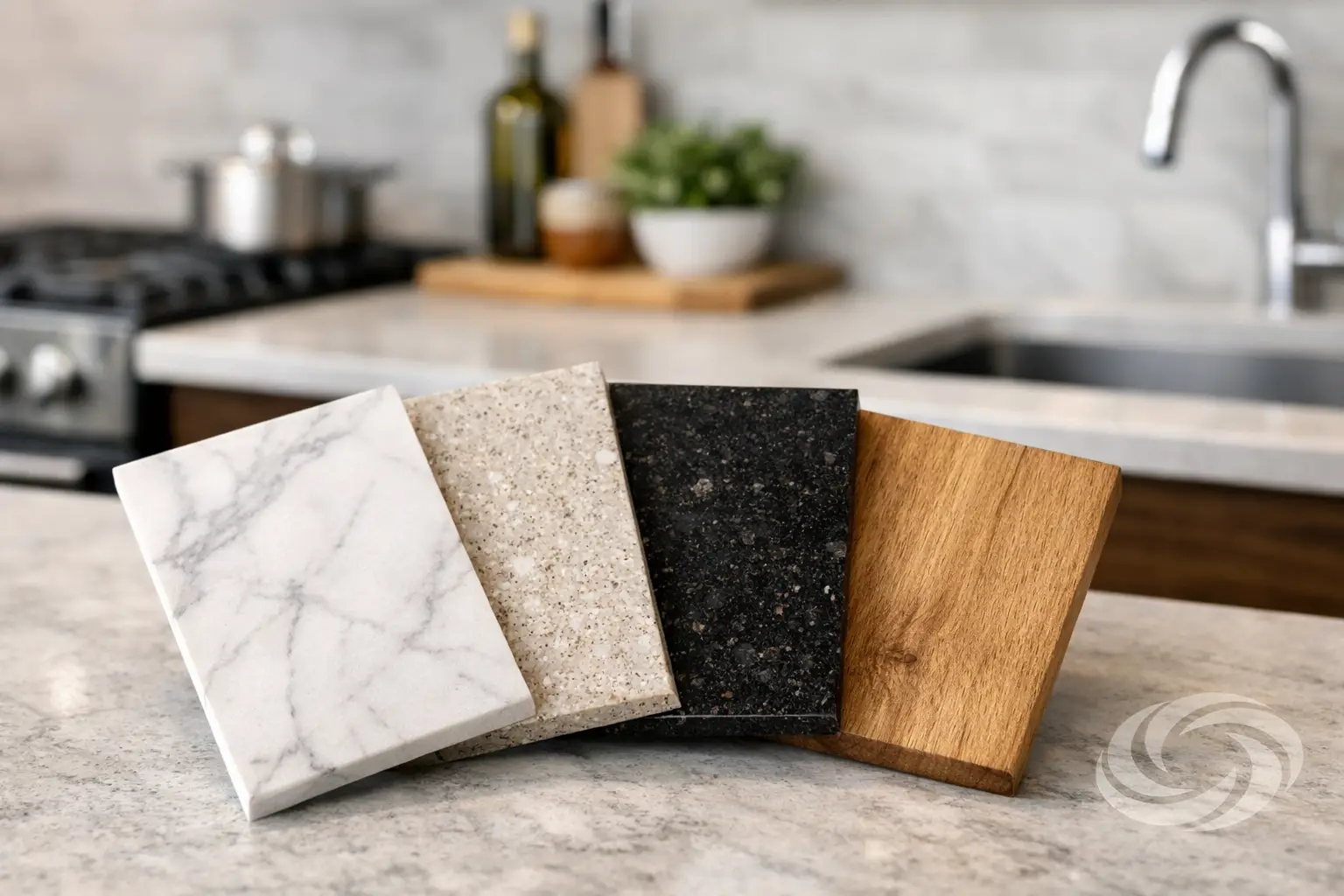
A good countertop material comparison starts where real kitchen decisions happen: at the sink, beside the stove, and around the budget. A surface can look perfect in a small sample, then feel impractical after a few months of cooking, cleaning, and family traffic. The right choice is not automatically the most expensive one. It is the one that fits how you use your kitchen, supports the look of your cabinetry, and keeps maintenance and long-term costs within reason.
For many renovations, countertops are selected after cabinet layout and color decisions are underway. That order makes sense. Countertops should complement the cabinet door style, backsplash, lighting, and hardware while also working with the structure underneath. Heavy stone surfaces, for example, need properly leveled, securely installed cabinets. Quality you can see and feel begins with a sound foundation.
What matters most when comparing countertops
Before choosing a material, decide which trade-offs you are comfortable making. Some homeowners prioritize a low-maintenance surface that handles busy mornings without special care. Others want natural variation and are willing to seal a stone countertop periodically. A rental owner may value fast replacement and controlled costs, while a homeowner planning to stay for years may place more value on appearance and resale appeal.
Cost matters, but it should be viewed as more than the price per square foot. Edge profiles, sink cutouts, seams, backsplash details, demolition, delivery, and installation can change the final number. A clear estimate should show what is included so there are no surprises once the project begins.
The main questions are straightforward: How often do you cook? Do you want a countertop that requires little attention? Are you concerned about scratches, heat, stains, or visible seams? And does the material fit the overall renovation budget after cabinets, appliances, flooring, and installation are considered?
Countertop material comparison: the leading options
Quartz: polished, durable, and low maintenance
Quartz is one of the most popular choices for kitchen renovations because it offers a refined appearance with dependable daily performance. It is an engineered surface made with natural quartz particles and resin binders. The result is a nonporous countertop that does not need regular sealing and is highly resistant to staining.
For a busy household, quartz is often the practical choice. Coffee, cooking oil, juice, and everyday food spills are easier to manage than they are with many natural stone options. It is also available in a broad range of whites, soft grays, warm neutrals, concrete looks, and marble-inspired patterns, making it easy to coordinate with modern cabinets or more traditional door styles.
Quartz is not indestructible. It can chip along an exposed edge if struck hard, and direct high heat can damage the resin content. Use trivets for hot pans and avoid cutting directly on the surface. It also tends to cost more than laminate, so it is best suited to projects where long-term appearance and easy upkeep are priorities.
Granite: natural character with added care
Granite remains a strong choice for homeowners who want a genuine natural stone surface. Every slab has its own movement, mineral pattern, and color variation. That individuality can give a kitchen more depth than a highly uniform manufactured surface.
Granite handles heat well and offers excellent durability when properly cared for. It is particularly appealing in kitchens where the countertop is intended to make a visual statement, such as a large island with a dramatic slab pattern.
The trade-off is maintenance. Granite is porous to varying degrees, and it generally needs sealing to help protect against stains and moisture. The exact care requirements depend on the slab and finish. Seams can also be more noticeable with strongly patterned material, so slab selection and layout planning deserve attention before installation.
Laminate: budget-friendly and more capable than many expect
Laminate countertops have come a long way from the limited patterns many people remember. Current options can resemble stone, wood, concrete, and solid colors, often at a much lower installed cost than quartz or natural stone. For a cost-conscious renovation, a suite turnover, or a secondary workspace, laminate can be a smart and attractive solution.
It is easy to clean, comfortable to use, and available in many edge styles. Laminate also allows homeowners to put more of their renovation budget toward durable plywood cabinetry, improved storage, lighting, or appliances.
Its limitations are worth understanding upfront. Laminate can scratch, and it is vulnerable to heat and water damage at seams or around a sink if the surface is not properly protected. A hot pot placed directly on it can leave permanent damage. It is a practical material, but it benefits from reasonable care.
Solid surface: smooth and repairable
Solid surface countertops offer a clean, consistent look with inconspicuous seams. Because the material runs through the full thickness of the surface, minor scratches and marks can often be refinished rather than requiring a complete replacement. Integrated sinks are also possible, creating a smooth transition that is especially easy to clean.
This material works well in kitchens, bathrooms, offices, and commercial settings where a uniform appearance and simple maintenance are important. It is nonporous and does not require sealing.
Compared with quartz, solid surface is generally softer and more susceptible to scratching or heat damage. It can still perform very well in a household kitchen, but it is best for clients who appreciate its repairability and streamlined look rather than expecting the hardness of stone.
Porcelain and sintered stone: high performance, precise installation
Porcelain and sintered stone surfaces have gained attention for their resistance to heat, scratching, UV exposure, and staining. They are often selected for contemporary kitchens, outdoor applications, or projects where a thin, architectural profile is desired. Many designs closely resemble marble or concrete without the same porosity concerns.
These materials can be excellent performers, but installation requires experience and careful handling. Slabs can be thinner than traditional stone, and cutouts for sinks, cooktops, and faucets need precise fabrication. Their price can also place them in the premium category. If you like this look, make sure the estimate accounts for the appropriate fabrication and installation process, not just the slab price.
Butcher block: warmth that needs commitment
Wood countertops bring immediate warmth to a kitchen. They pair especially well with painted cabinets, natural finishes, and islands intended to feel more like furniture than a work surface. A butcher block section can also create a useful baking or serving area without covering every counter in wood.
Wood does require ongoing care. It can dent, scratch, dry out, and absorb moisture if neglected. Regular oiling or an appropriate protective finish is part of ownership, and standing water near the sink should be avoided. For the right homeowner, those marks can become character. For someone who wants a countertop to stay visually unchanged, quartz or solid surface is usually a better fit.
Match the surface to the way your kitchen works
The best countertop is rarely chosen in isolation. A bright quartz with subtle veining may balance dark cabinet doors and make a compact kitchen feel more open. A deeper granite or porcelain slab can add contrast to warm wood cabinetry. Laminate in a convincing stone pattern can deliver a polished result when the budget needs to stay controlled.
Function matters just as much. A family that cooks every night may prefer quartz for its stain resistance and easy cleanup. A serious baker may appreciate the cool feel of stone. A landlord managing several units may choose laminate or solid surface for predictable cost and straightforward replacement. In a kitchen with a large island, the slab size, seam placement, and overhang support should be planned before materials are ordered.
Do not overlook the sink and edge details. An undermount sink gives stone, quartz, porcelain, and solid surface a clean, continuous appearance, but it requires careful installation and proper support. A simple eased edge is durable, easy to clean, and often more cost-effective than a detailed profile. These small choices affect both the finished look and the final budget.
Installation quality protects the investment
Even a premium countertop will not perform as intended if the cabinets below are out of level or the measurements are rushed. Cabinet installation should be precise before final countertop templates are taken. Walls are not always straight, corners can be uneven, and older homes often need thoughtful adjustment to achieve a clean fit.
At Emcab Kitchens, countertop planning is approached as part of the complete kitchen, not as an isolated purchase. Cabinet layout, material selection, backsplash planning, and installation sequencing all need to work together. That coordinated process helps protect clear timelines, accurate alignment, and a cleaner finish.
A countertop should make daily life easier, whether that means wiping up breakfast without worry, setting out food for a gathering, or simply enjoying a kitchen that finally feels complete. Bring a few cabinet colors, flooring samples, and honest budget priorities to your design consultation. The right surface usually becomes clear once the full kitchen is considered.