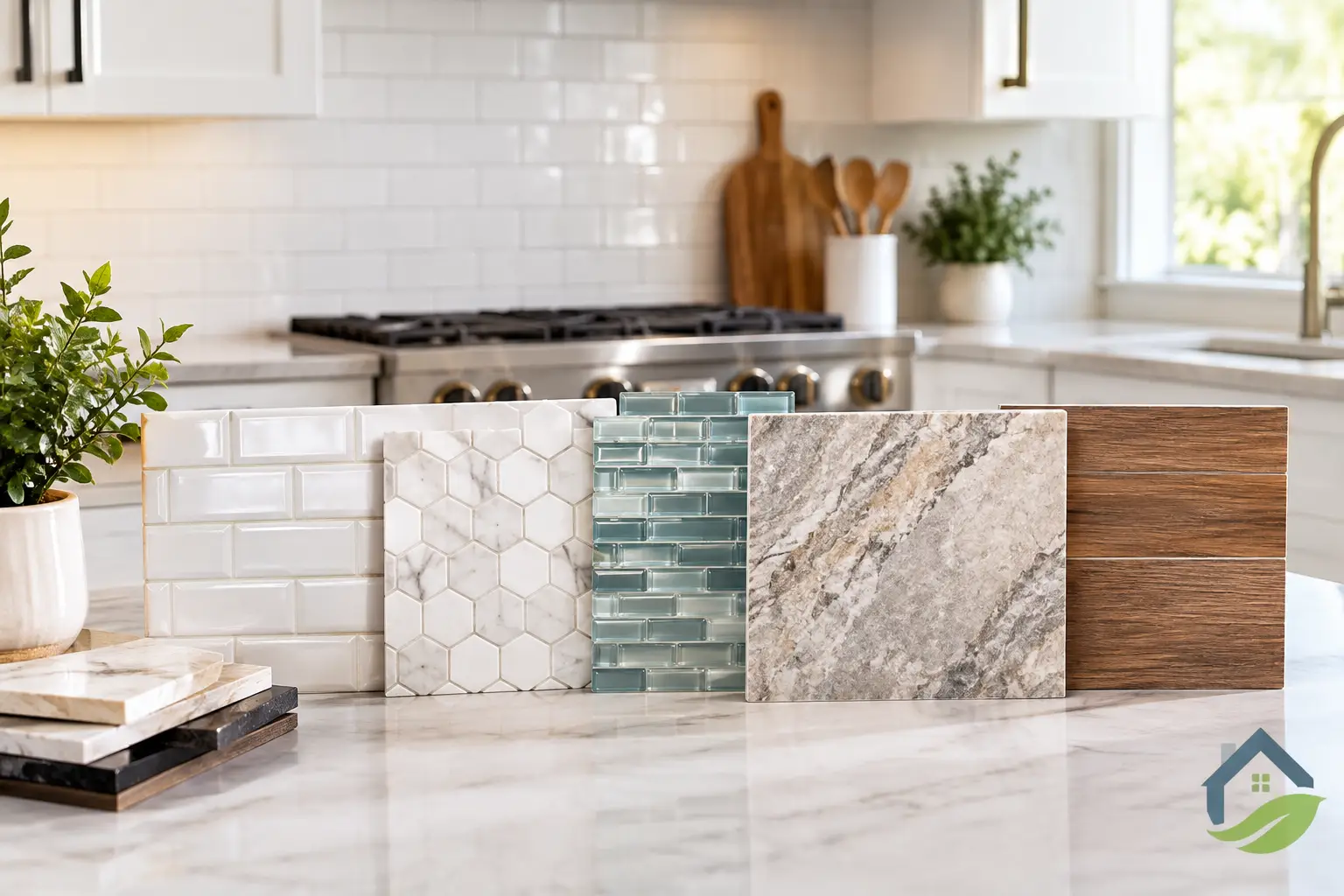
A backsplash is often the final decision in a kitchen remodel, yet it can change how the entire room feels. The best kitchen backsplash materials should do more than look good beside new cabinets and countertops. They need to handle cooking splatter, frequent cleaning, heat near the range, and the visual demands of everyday life.
For most homeowners, the right choice comes down to three questions: How much maintenance are you comfortable with? What does the countertop require visually? And where should the budget go for the greatest long-term value? A dramatic backsplash may suit a simple cabinet door and quiet countertop, while a heavily patterned counter often needs a more restrained wall finish.
How to Choose the Best Kitchen Backsplash Materials
Start with the surfaces that are harder or more expensive to change. Cabinet color, door style, countertop material, and flooring should guide the backsplash, not the other way around. A backsplash occupies a relatively small area, but it sits at eye level and runs directly beside the countertop, so competing patterns can make a kitchen feel crowded.
Practical performance matters just as much. The area behind a cooktop needs a finish that resists stains and cleans easily. Behind a sink, water resistance and grout quality deserve extra attention. If your kitchen sees daily family cooking, choose a material that will still look good after years of wiping, not only on installation day.
Installation is another factor. Tile offers flexibility but involves more layout decisions, cuts, and grout lines. Full-height slabs create a clean, premium look with fewer joints, but material and fabrication costs can be higher. A clear plan before ordering helps prevent last-minute changes, extra labor, and surprises in the renovation budget.
Ceramic and Porcelain Tile: The Practical Standard
Ceramic and porcelain tile remain two of the most reliable backsplash choices. They are available in a wide range of colors, sizes, textures, and price points, making them suitable for compact updates and full custom kitchens alike. Subway tile is still a dependable option, but larger rectangles, stacked layouts, handmade-look finishes, and subtle geometric patterns can give it a more current appearance.
Porcelain is generally denser and less absorbent than ceramic, which makes it especially durable around sinks and cooking areas. Both materials are easy to clean when properly installed, and they work with nearly every cabinet style, from classic shaker doors to flat-panel modern cabinetry.
The trade-off is grout. More grout lines mean more routine cleaning, especially with white or textured grout in a busy kitchen. Choosing a quality stain-resistant grout, a sensible grout color, and a tile size that fits the space can make maintenance much easier. Larger-format tile reduces grout lines, while smaller mosaic tile adds texture and detail.
Tile is often the best fit when you want design flexibility without committing the budget to a slab backsplash. It also makes future updates easier if your style changes down the road.
Best uses for tile
Tile works particularly well when a kitchen needs a focal point. A simple white quartz countertop can support a patterned porcelain tile, a soft green ceramic tile, or a glossy vertical stack. In contrast, a countertop with active veining may look its best beside a matte, solid-color tile that gives the room visual breathing space.
Quartz Slab Backsplashes: Clean Lines and Easy Cleanup
Using the same quartz for the countertop and backsplash creates a polished, continuous finish. It is especially effective in contemporary kitchens, where clean lines and fewer visual interruptions help the room feel larger. With no grout joints across the main wall area, cleanup is simple and the result can look precise from every angle.
A quartz slab backsplash is a strong choice for homeowners who want a low-maintenance surface and a coordinated design. It pairs naturally with painted cabinetry, wood-look cabinet finishes, and modern hardware. If the countertop has gentle movement, extending it up the wall can feel refined rather than busy.
Cost is the main consideration. Slab material, measuring, fabrication, and installation usually make this option more expensive than standard tile. The layout also needs careful planning around outlets, range hoods, windows, and open shelving. Precise installation is essential, because alignment errors are more noticeable on a large continuous surface.
For a kitchen where the countertop is the feature material, a matching quartz backsplash often delivers quality you can see and feel. It is not always necessary to run it to the ceiling, however. A standard-height slab backsplash can provide the same clean function while keeping the project budget controlled.
Natural Stone: Character With More Care
Marble, travertine, slate, and other natural stones bring depth that manufactured materials cannot fully duplicate. Each piece has natural variation, which can make a kitchen feel warm, layered, and personal. Stone can be an excellent match for traditional, transitional, or organic modern kitchen designs.
That character comes with maintenance requirements. Many natural stones are porous and should be sealed to help protect against staining and moisture. Acidic foods, colored sauces, and aggressive cleaners can affect some stone finishes. A honed surface may hide everyday marks better than a polished one, but it still needs appropriate care.
Natural stone is worth considering if you appreciate variation and are willing to maintain it properly. It is less ideal for homeowners who want a completely worry-free surface behind an active cooktop. In those cases, porcelain tile that resembles stone can provide a similar look with easier upkeep.
Glass Tile: Light, Color, and a More Delicate Finish
Glass tile reflects light, which can be useful in a smaller or darker kitchen. It is available in clear, frosted, glossy, and textured finishes, often in mosaics or narrow rectangular formats. A pale glass backsplash can brighten the area under upper cabinets and add a clean, fresh finish without introducing a heavy pattern.
Glass is nonporous and easy to wipe, but installation requires care. Cuts, adhesive choice, and wall preparation all affect the finished appearance. Chips or cracking can be more noticeable than they are with ceramic or porcelain, particularly around outlet openings. For this reason, glass tile is best installed by professionals who can manage the details and keep the lines even.
Use glass when light reflection and color are the priority. For a hardworking family kitchen, consider placing it in a lower-splash area or choosing a durable glass product with a simple layout rather than a highly intricate mosaic.
Stainless Steel and Metal: Best for High-Use Cooking Zones
Stainless steel backsplashes bring a commercial-inspired finish to a residential kitchen. They are heat-resistant, nonporous, and particularly practical behind a range. A single stainless panel can make cleanup fast after cooking, while metal tile can add texture to an industrial or modern design.
The limitation is that stainless steel can show fingerprints, water marks, and scratches. It also creates a cooler look that may not suit every cabinet finish. Pairing it with warm wood tones, matte black hardware, or soft neutral cabinets can make the result feel intentional rather than overly utilitarian.
For homeowners who cook frequently, stainless steel can be an excellent targeted solution behind the cooktop while another material continues across the remaining walls. This approach keeps the practical benefit where it matters most.
Think About the Full Kitchen, Not One Sample
A backsplash sample can look very different once it is installed across an entire wall. Before making a final choice, view samples beside the actual cabinet finish and countertop material in the room’s lighting. Daylight, under-cabinet lighting, and evening overhead lighting can each change how color and sheen appear.
Scale is equally important. Small tile may add welcome detail in a large kitchen with simple finishes, but it can feel busy in a compact space. Large-format tile or a slab backsplash can visually open a smaller kitchen, provided the pattern does not overwhelm the cabinets.
Also consider where the backsplash stops. Running material to the bottom of upper cabinets is traditional and cost-conscious. Taking it to the ceiling behind a range hood, open shelf, or window wall can create a stronger focal point. The right choice depends on the layout, ventilation plan, and how much visual emphasis the kitchen needs.
Make the Material Decision Before Installation Begins
The strongest backsplash projects are planned alongside cabinets, counters, lighting, and electrical locations. This avoids awkward cuts around outlets, mismatched edge details, or a finish that fights the cabinet color. A well-coordinated renovation also makes it easier to keep timelines clear and protect the budget from avoidable changes.
At Emcab Kitchens, backsplash selections are considered as part of the full kitchen plan, so cabinetry, countertop transitions, and installation details work together. The goal is not simply to choose a popular material. It is to choose one that suits how you cook, clean, entertain, and use the room every day.
A backsplash should make your kitchen easier to live with while giving it a finished, intentional look. Choose the material that fits your routine first, then let the color, texture, and pattern bring the design to life.