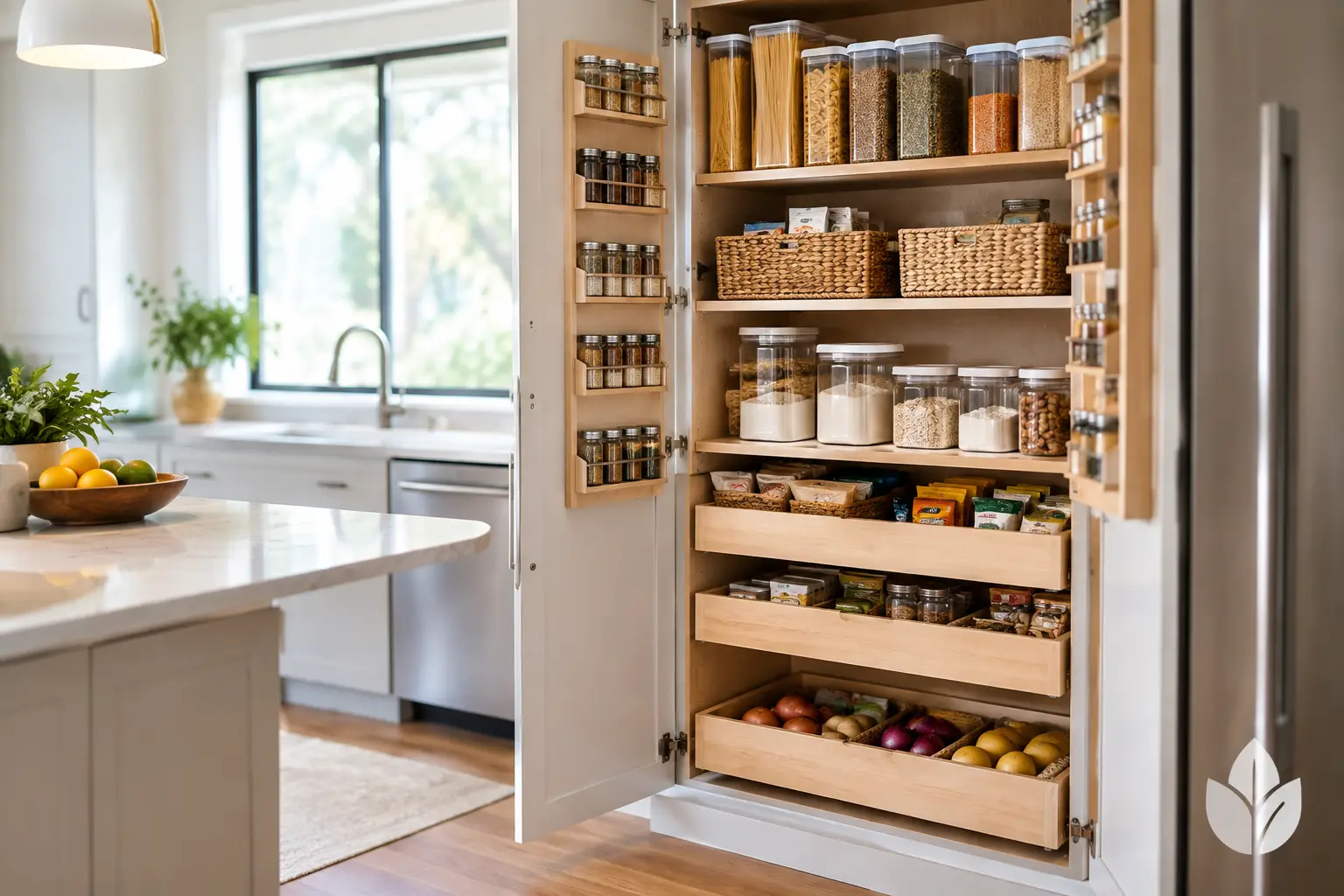
A pantry can look full and still fail the household using it. Cereal boxes disappear behind small appliances, canned goods collect in dark corners, and groceries get purchased twice because no one can see what is already there. Well-planned pantry storage systems solve that daily frustration by giving every category a visible, reachable place.
The best solution is rarely a single cabinet accessory. It is a combination of cabinet dimensions, shelf spacing, pull-out hardware, and a layout designed around how your household shops and cooks. Whether you are renovating an older Winnipeg kitchen or building a new one, pantry storage deserves the same careful planning as your main work zone.
Start With How You Actually Use the Pantry
A pantry design should support real routines, not a showroom version of them. A household that cooks from scratch needs room for dry ingredients, oils, small appliances, and larger cookware. A busy family may need accessible snack zones, lunch supplies, and a place for bulk purchases. Someone who entertains often may prioritize serving pieces, beverage storage, and overflow dishes.
Before selecting shelves or pull-outs, take stock of what currently lives in your pantry or kitchen cabinets. Include the awkward items: tall bottles, oversized bags of flour, paper towel packages, countertop appliances, pet food, and recycling bins. These are often the items that expose a layout that looks good on paper but does not work in practice.
It also helps to think about frequency. Everyday items should sit between waist and eye level, where they are easiest to reach. Reserve higher shelves for seasonal serving ware, backup supplies, or items used less often. Lower areas are ideal for heavier goods, provided the cabinetry and hardware are built to carry the load.
Pantry Storage Systems Worth Considering
There is no single best pantry configuration. The right choice depends on available space, your budget, and the amount of storage your kitchen already provides. A thoughtful cabinet plan can often deliver more usable capacity than a larger pantry with fixed, poorly spaced shelves.
Pull-Out Pantry Cabinets
A tall pull-out pantry brings the contents forward when opened, making use of the full cabinet depth. Instead of reaching past the items at the front to find something at the back, you can see both sides at once. This is particularly useful in narrow spaces where a walk-in pantry is not possible.
Pull-outs are a strong option for spices, packaged foods, condiments, baking supplies, and smaller grocery items. They do involve more hardware than fixed shelving, so quality matters. Soft-close, full-extension hardware keeps the movement controlled and makes a full pantry feel stable rather than flimsy.
Adjustable Shelving
Fixed shelves create a predictable problem: the spacing works for some items but wastes vertical room above others. Adjustable shelves give a pantry more flexibility as household needs change. A shelf that holds canned food today may need to accommodate a blender or a stack of storage containers later.
For the most useful result, combine adjustable shelves with enough shelf depth for your intended items. Deep shelves can hold a great deal, but they become less practical when everything disappears behind the front row. In a deep pantry, pull-out trays or interior drawers can make that depth work harder.
Roll-Out Trays and Deep Drawers
Roll-out trays are an excellent middle ground between open shelving and a full pull-out pantry. They work well in lower pantry cabinets, where bending and searching are otherwise unavoidable. Deep drawers can hold potatoes, onions, baking supplies, snacks, or heavier packages while keeping the contents easy to view.
For larger households, separate drawers by category rather than trying to make every drawer do everything. One for breakfast foods, one for baking, and one for snacks is often easier to maintain than a single oversized catch-all drawer.
Door-Mounted Storage
The inside of a pantry door can add useful space for slim items such as spices, wraps, bags, cleaning supplies, or small jars. It is a practical addition, but it should not be used to compensate for a poorly sized pantry. Door storage is best for lightweight items that stay organized when the door moves.
Open Shelves and Appliance Garages
Open shelves can make a pantry feel spacious and convenient, especially for frequently used dry goods stored in matching containers. The trade-off is visibility. Open storage requires more regular upkeep, and it can quickly look crowded if it becomes a landing spot for random packages.
If you use a toaster, coffee maker, mixer, or other appliance every day, a dedicated pantry shelf or appliance garage can keep it accessible without taking over the counter. Proper outlet placement and enough clearance for doors or lift-up hardware should be addressed during the design stage, not after installation.
Design Around Reach, Weight, and Visibility
Good pantry design has a physical side. Tall cabinets need sturdy construction, precise installation, and reliable mounting because they carry significant weight once stocked. Cabinet boxes made with solid plywood offer dependable support for shelves, pull-outs, and daily use, particularly compared with lighter materials that may sag or loosen over time.
Visibility matters just as much. Clear containers can help with staples such as pasta, rice, flour, and cereal, but they are not required everywhere. The goal is not to make the pantry look staged. The goal is to make it easy to identify what you have and keep groceries from getting lost.
Lighting is another detail that has an outsized effect. A deep cabinet or walk-in pantry can feel much more useful with interior lighting that turns on when the door opens. It reduces shadowy corners and helps the pantry remain functional during early mornings and busy evenings.
Plan Pantry Storage With the Kitchen Layout
Pantry placement affects how the whole kitchen feels. A pantry close to the refrigerator makes unloading groceries easier. One located near the prep area helps keep ingredients within reach while cooking. In a smaller kitchen, a tall pantry cabinet can anchor one end of a cabinet run and provide substantial storage without needing a separate room.
For a walk-in pantry, make sure there is enough clearance to enter, turn, and access shelves without blocking the kitchen path. Narrow walk-ins can work very well with shelving on one side or a shallow U-shape, but packing deep shelves onto every wall can create hard-to-reach corners.
Do not overlook the relationship between the pantry and countertop space. If the pantry stores frequently used appliances, a nearby landing area makes setup and cleanup easier. If it stores bulk food, prioritize shelf strength and straightforward access over decorative features.
Avoid the Common Pantry Mistakes
The most common mistake is choosing a pantry based only on its exterior appearance. A tall cabinet with beautiful doors can still be frustrating if the shelves are too deep, too far apart, or unable to adjust. Another frequent problem is overfilling every available inch. A little breathing room helps a pantry stay organized after the first big grocery trip.
It is also wise to avoid putting all storage on high shelves. A pantry should work for the people who use it most, including children who need approved snacks within reach and adults who do not want to climb for everyday ingredients. For homes with changing needs, adjustable interiors provide more long-term value than a rigid layout.
Finally, budget for the details that improve daily use. Premium pull-out hardware, soft-close mechanisms, durable shelves, and precise alignment are not simply extras when they prevent sticking drawers, sagging shelves, and cluttered corners over years of use.
A Pantry Should Make the Kitchen Easier to Run
A well-designed pantry does not need to be oversized or packed with complicated accessories. It needs to fit your space, hold the items you actually buy, and make them simple to find. During a kitchen renovation, this is the point where professional layout planning pays off: cabinet sizes, shelf positions, finishes, hardware, and installation can be coordinated instead of handled as separate decisions.
Emcab Kitchens helps homeowners plan pantry storage that feels polished, durable, and practical from the first day of use. A free design consultation can turn a frustrating cabinet or underused corner into storage that supports your household, your budget, and the way you cook. The most useful pantry is the one that still works well on an ordinary Wednesday after a full grocery run.