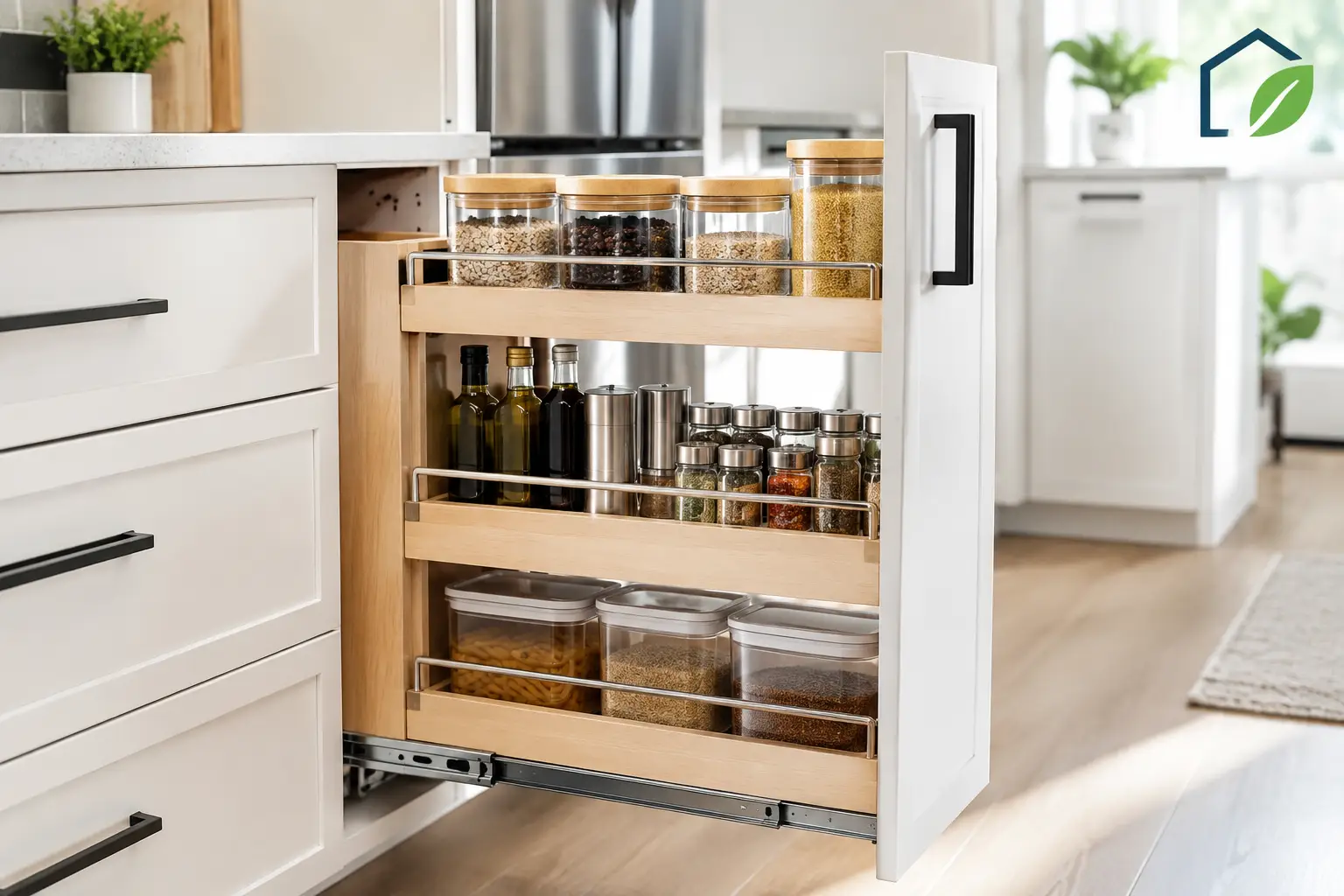
A kitchen can have beautiful cabinet doors and premium countertops yet still feel frustrating if everyday items disappear into deep, dark cabinets. The best pull-out cabinet accessories solve that problem by bringing storage forward, keeping supplies visible, and making every inch easier to use. For a renovation, they are often the details that turn new cabinetry into a kitchen that works well every morning, weeknight, and holiday.
Pull-outs are not automatically the right answer for every cabinet. They take up some interior space, add hardware costs, and need to be planned around plumbing, appliance clearances, and how your household actually cooks. The strongest designs focus on the places where reaching, bending, or sorting is currently a daily annoyance.
Where Pull-Out Accessories Make the Biggest Difference
Start with the cabinets that create the most wasted motion. In most kitchens, that means lower cabinets, narrow spaces beside appliances, pantry storage, and the area beneath the sink. A well-planned pull-out keeps frequently used items at a comfortable reach instead of forcing you to crouch and search at the back of a shelf.
The right accessory also depends on the cabinet construction. A solid plywood cabinet box and quality soft-close slides provide the stable foundation needed for loaded pull-outs. A shelf that only holds a few lightweight items has different hardware needs than a wide organizer carrying pots, cans, or a full recycling bin. Good storage design is not simply about adding more moving parts. It is about matching the accessory, slide capacity, and cabinet opening to the job.
Pull-Out Waste and Recycling Centers
A concealed waste and recycling center is one of the most practical upgrades in a kitchen renovation. It keeps bags, compost containers, and recycling out of sight while placing them close to the prep area. For many homes, a double-bin pull-out is the best balance of convenience and capacity.
Placement matters as much as the bins themselves. A pull-out near the sink or main prep surface makes cleanup quicker, while one beside the dishwasher can simplify sorting. Larger families may benefit from a three-bin configuration, but it requires enough cabinet width and a layout that does not interfere with traffic flow.
Choose durable, full-extension hardware for this application. Waste bins get pulled open often, and the load becomes heavier than expected when bags are full. Soft-close slides reduce slamming and help protect the cabinet over time, but reliable mounting and proper alignment are what keep the unit operating smoothly.
Base Cabinet Roll-Out Shelves
Deep base cabinets are useful in theory and inconvenient in practice. Roll-out shelves bring cookware, small appliances, serving dishes, and pantry staples into view without making you unload the front of the cabinet first. They are especially valuable for homeowners who want easier access without replacing every lower cabinet with drawers.
Unlike a fixed shelf, a roll-out should be sized for what will live on it. Heavy cast-iron cookware, mixers, and stacks of dishes need stronger slides than spices or plastic containers. Full-extension slides are worth considering because a partially extended shelf can still leave items hidden at the back.
There is a trade-off: several roll-outs inside one cabinet can cost more than basic shelving and slightly reduce the clear interior height available for tall items. A thoughtful design may combine one deeper roll-out for pots with one shallower shelf for lids, baking sheets, or food storage containers.
Pull-Out Pantry Systems
A tall pull-out pantry creates accessible food storage in a narrow footprint. Instead of reaching behind rows of cans and boxes, the entire unit moves forward so both sides are visible. This can be an excellent choice beside a refrigerator, at the end of a cabinet run, or in a compact kitchen where a walk-in pantry is not possible.
For narrow openings, a vertical pull-out with adjustable shelves can hold oils, dry goods, snacks, and cooking ingredients. Wider pantry cabinets may use interior pull-out trays or drawers rather than a single tall mechanism. The best approach depends on the available opening, desired capacity, and how much weight the pantry will carry.
A tall pantry pull-out needs precise installation. When loaded unevenly, a poorly aligned unit can feel difficult to operate. Quality slides, secure cabinet anchoring, and careful adjustment make a noticeable difference. This is one area where professional planning helps avoid a storage feature that looks good at first but performs poorly under everyday use.
Best Pull-Out Cabinet Accessories for Hard-to-Use Areas
The most useful accessories often fit into the spaces that standard cabinets leave behind. These small improvements can make a kitchen feel more organized without changing its overall footprint.
Narrow Spice and Bottle Pull-Outs
A narrow pull-out cabinet, often installed near the cooktop, gives oils, spices, vinegars, and cooking sauces a dedicated home. The shallow depth keeps labels visible and prevents small containers from getting lost behind larger items.
This accessory works best when the opening is genuinely narrow. It is not a substitute for broad pantry storage, and overloading it with large bottles can make it less stable. When planned around the items you use most, though, it can reduce countertop clutter and make cooking more efficient.
Under-Sink Pull-Out Organizers
The cabinet beneath the sink is usually one of the most awkward spaces in the kitchen. Plumbing lines, shutoff valves, and garbage disposal components limit what can fit. A basic shelf often becomes a crowded collection of cleaners, sponges, bags, and paper towels.
Under-sink pull-outs are designed around those obstacles. Shallow trays can store cleaning products, while side-mounted racks can hold towels or spray bottles. Measurements are essential here. The accessory must clear pipes, allow access to valves, and leave room for service if a repair is needed later.
A good designer will not force a standardized organizer into an unsuitable cabinet. Sometimes a simpler pull-out tray is the smarter, more affordable choice. Practical storage should make maintenance easier, not complicate it.
Blind Corner Pull-Outs
Blind corner cabinets can create a large amount of difficult-to-reach storage. Modern corner pull-out systems use swinging, sliding, or pivoting shelves to bring stored items out from the hidden portion of the cabinet. They are useful for pots, mixing bowls, and occasional-use appliances.
These systems are more complex than a standard roll-out, so they should be selected carefully. They cost more, have specific clearance requirements, and must be coordinated with adjacent door styles and cabinet dimensions. In some layouts, drawers or a different cabinet configuration may provide better value. In others, a well-built blind corner pull-out makes previously wasted space genuinely useful.
Tray Dividers and Vertical Pull-Outs
Baking sheets, cutting boards, serving trays, and cooling racks are awkward when stacked flat. Vertical dividers keep them upright and easy to grab. They can be installed in a narrow base cabinet, a tall cabinet, or a dedicated pull-out near the oven.
This is a simple accessory, but it can have an outsized effect for households that cook and bake often. It also prevents metal pans from scraping across one another every time a tray is needed. For a more customized setup, divider spacing can be planned around the items you already own.
How to Choose Accessories That Last
The best-looking pull-out is not always the best fit. Before selecting accessories, consider how many people use the kitchen, what you store most often, and which cabinet zones cause the most frustration. A family that cooks daily may prioritize waste pull-outs, pantry access, and heavy-duty cookware storage. A smaller household may get more value from a few well-placed roll-outs and an organized under-sink cabinet.
Hardware quality deserves close attention. Look for smooth full-extension slides, soft-close operation where appropriate, and a load rating that matches the intended contents. Thin, low-capacity hardware can feel acceptable in a showroom but become unreliable after months of regular use. Precise cabinet installation also matters because even premium slides will not operate well if the cabinet box is out of square or poorly secured.
Keep cleaning in mind, too. Open wire systems can make crumbs and spills easy to spot, while solid-bottom trays may be simpler to wipe down. Removable bins, adjustable dividers, and accessible mounting points save time over the life of the kitchen.
Plan Pull-Out Storage Before Cabinets Are Built
Pull-out accessories are easiest to incorporate during the cabinet design stage. That is when cabinet widths, door swings, drawer placements, appliance clearances, and plumbing locations can be coordinated without costly adjustments later. Trying to retrofit every storage idea after installation can limit options and create compromises.
At Emcab Kitchens, storage planning begins with how the kitchen will be used, not with a one-size-fits-all accessory list. During a free design consultation, the team can help identify which pull-outs support your routine, where standard cabinetry makes more sense, and how to keep the project aligned with your budget. With solid plywood construction, quality hardware, precise installation, and a clear plan from the start, smart storage becomes quality you can see and feel every day.
The most satisfying kitchen upgrades are often the ones you stop thinking about because they simply make daily tasks easier. Choose pull-outs for the problem areas, invest in dependable hardware, and let the layout do more of the work for you.