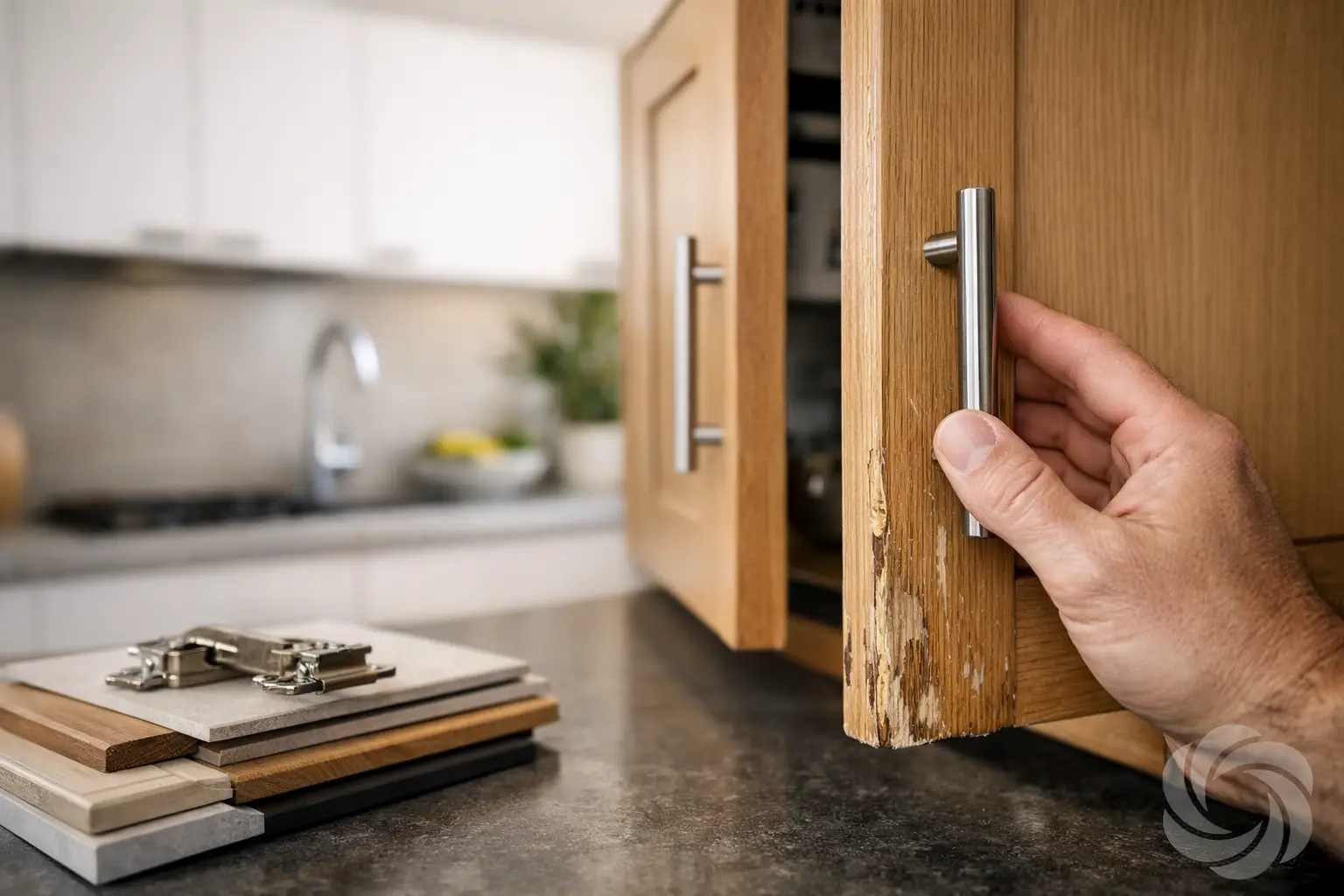
A cabinet door that rubs, a drawer that sticks, or swelling beneath the sink can make a kitchen feel worn out long before the room itself is ready for renovation. So, how long do cabinets last? For most homes, the answer ranges from 15 to 30 years, but the real lifespan depends less on a calendar and more on what the cabinets are made of, how they were installed, and how they have handled daily use.
Well-built cabinets can remain attractive and functional for decades. Lower-grade boxes exposed to moisture, heavy use, or poor installation may need significant work much sooner. Knowing the difference helps homeowners make a smart repair-or-replace decision and spend their renovation budget where it will count.
How Long Do Cabinets Last in a Typical Kitchen?
Cabinet lifespan varies by construction quality. Entry-level cabinets made with particleboard boxes and basic hardware may last around 10 to 15 years in a busy kitchen. They can look acceptable at first, but moisture, loose fasteners, and sagging shelves tend to show up over time.
Cabinets with plywood boxes, durable finishes, and quality soft-close hardware commonly last 20 to 30 years. Custom cabinetry can last longer when it is built for the space, properly installed, and maintained. A solid cabinet box does not automatically mean every component will last forever, however. Hinges, drawer slides, pulls, and even doors may eventually need adjustment or replacement.
The most useful question is not simply, “How old are these cabinets?” It is, “Is the cabinet structure still sound?” Cosmetic wear can often be renewed. Water-damaged or failing cabinet boxes are a different issue.
What Determines How Long Cabinets Last?
Cabinet box material
The cabinet box carries the weight of dishes, cookware, countertops, and daily use. It is the part homeowners do not always see, but it has a major effect on longevity.
Plywood is a strong choice for cabinet construction because its layered structure holds screws well and resists warping better than many lower-cost materials. It is particularly valuable around sinks, dishwashers, and other areas where moisture is more likely. Particleboard can perform adequately in dry, low-use applications, but it is more vulnerable to swelling once water reaches exposed edges or joints.
Even quality plywood needs proper edge treatment, a durable finish, and careful installation. Material matters, but so does the way every piece is assembled.
Finish and door material
Cabinet finishes take the visible impact of kitchen life: fingerprints, grease, steam, cleaning products, sunlight, and the occasional bump from a chair or pan. Premium paint, stain, laminate, or thermofoil can all work well when matched to the right application and cared for properly.
Painted cabinet doors may eventually show small chips around high-contact areas, especially near handles. Wood doors can expand and contract slightly with seasonal humidity changes. Laminate surfaces are generally easy to clean and durable, though damaged edges can allow moisture underneath. These concerns do not always mean replacement is necessary. Often, a touch-up, refinishing, or door replacement can restore the look while the cabinet boxes remain in service.
Hardware and moving parts
Doors and drawers are the hardest-working parts of a kitchen. Soft-close hinges and full-extension drawer slides reduce slamming and make storage easier to use, but quality matters. Better hardware is designed for repeated cycles and can be adjusted when doors drift out of alignment.
A loose hinge, uneven door gap, or drawer that no longer closes smoothly is often a repair issue, not proof that the entire kitchen has failed. Hardware can wear out before the cabinetry does, which is one reason a professional inspection is helpful before making a major renovation decision.
Moisture and ventilation
Water is the most common threat to cabinet life. A slow plumbing leak beneath the sink can soften a cabinet bottom before anyone notices it. Steam from frequent cooking, a leaking dishwasher connection, or wet mops stored against cabinets can also cause damage over time.
Watch for bubbling finishes, darkened seams, soft spots, musty odors, or swollen cabinet bottoms. Addressing a leak quickly can save a cabinet box. Leaving it in place can turn a small repair into a larger kitchen renovation.
Winnipeg homes also experience significant seasonal changes. Maintaining stable indoor humidity where possible and using a properly vented range hood helps protect cabinets, flooring, and surrounding finishes from excess moisture.
Installation quality
Cabinets can be built well and still perform poorly if they are not installed correctly. Base cabinets must be level, securely fastened, and properly shimmed against uneven walls or floors. Wall cabinets need reliable support and accurate fastening. Doors and drawers should be aligned after installation, not left to compensate for an uneven cabinet run.
Precise installation protects both appearance and function. It prevents countertop stress, uneven gaps, doors that swing open, and drawers that bind. It also gives the kitchen the clean, finished look homeowners expect after investing in new cabinetry.
Signs Your Cabinets May Be Near the End
Age alone is not a reason to replace cabinets. Many kitchens look dated but still have structurally sound boxes that can support new doors, hardware, countertops, or a fresh finish. Replacement becomes more worthwhile when several problems are happening at once.
Look closely at cabinet bottoms, corners, and the area around plumbing. Persistent swelling, crumbling material, loose wall cabinets, major warping, or shelves that sag under normal loads are signs the structure may be failing. Repeated door and drawer adjustments can also point to a larger alignment or box issue.
Function is equally important. A kitchen with shallow drawers, unusable corners, poor pantry storage, or cramped work zones may no longer meet the household’s needs, even if the cabinets are technically intact. In that case, replacing cabinetry is an opportunity to improve the layout rather than simply recreate what was there before.
When Repair or Refacing Makes Sense
Repair is often the practical choice when cabinet boxes are stable and the issue is limited to hardware, finish wear, or a few damaged components. Replacing hinges, installing new drawer slides, adjusting doors, or repairing a localized water-damaged panel can extend the life of a good kitchen.
Refacing or replacing doors may make sense when the layout works, the cabinet boxes are sound, and the goal is a visual update. It can change the style of the room without the cost and disruption of a full replacement. The trade-off is that it does not solve poor storage, weak cabinet boxes, or an awkward floor plan.
A full cabinet replacement is usually the better long-term investment when structural damage is widespread, the kitchen layout is inefficient, or multiple surfaces and systems need attention at the same time. This is where a complete design process can prevent surprises. Cabinet layout, pantry storage, island size, countertop selection, backsplash, electrical needs, and installation details should work together before production begins.
How to Help Cabinets Last Longer
Good cabinet care is straightforward. Clean spills promptly, especially around the sink and dishwasher. Use a soft cloth with a mild cleaner rather than abrasive pads or harsh chemicals that can dull a finish. Avoid hanging heavy items from cabinet doors and do not overload drawers or shelves beyond their intended use.
Check under the sink a few times each year for moisture or plumbing drips. If doors begin rubbing or drawer fronts become uneven, have the hardware adjusted before the problem causes extra wear. Small maintenance steps are far less disruptive than replacing damaged boxes later.
When planning a new kitchen, invest first in the elements that are difficult to change after installation: cabinet box construction, hardware, layout, and installation quality. Decorative choices can be updated over time. A strong foundation gives you more flexibility and better value from the room.
For homeowners deciding whether their current kitchen is worth repairing or ready for replacement, a design consultation can bring clarity. Emcab Kitchens can assess the condition of the cabinetry, discuss practical storage improvements, and provide a clear plan built around your space, priorities, and budget. The right next step is the one that gives your kitchen reliable function now and quality you can see and feel for years to come.