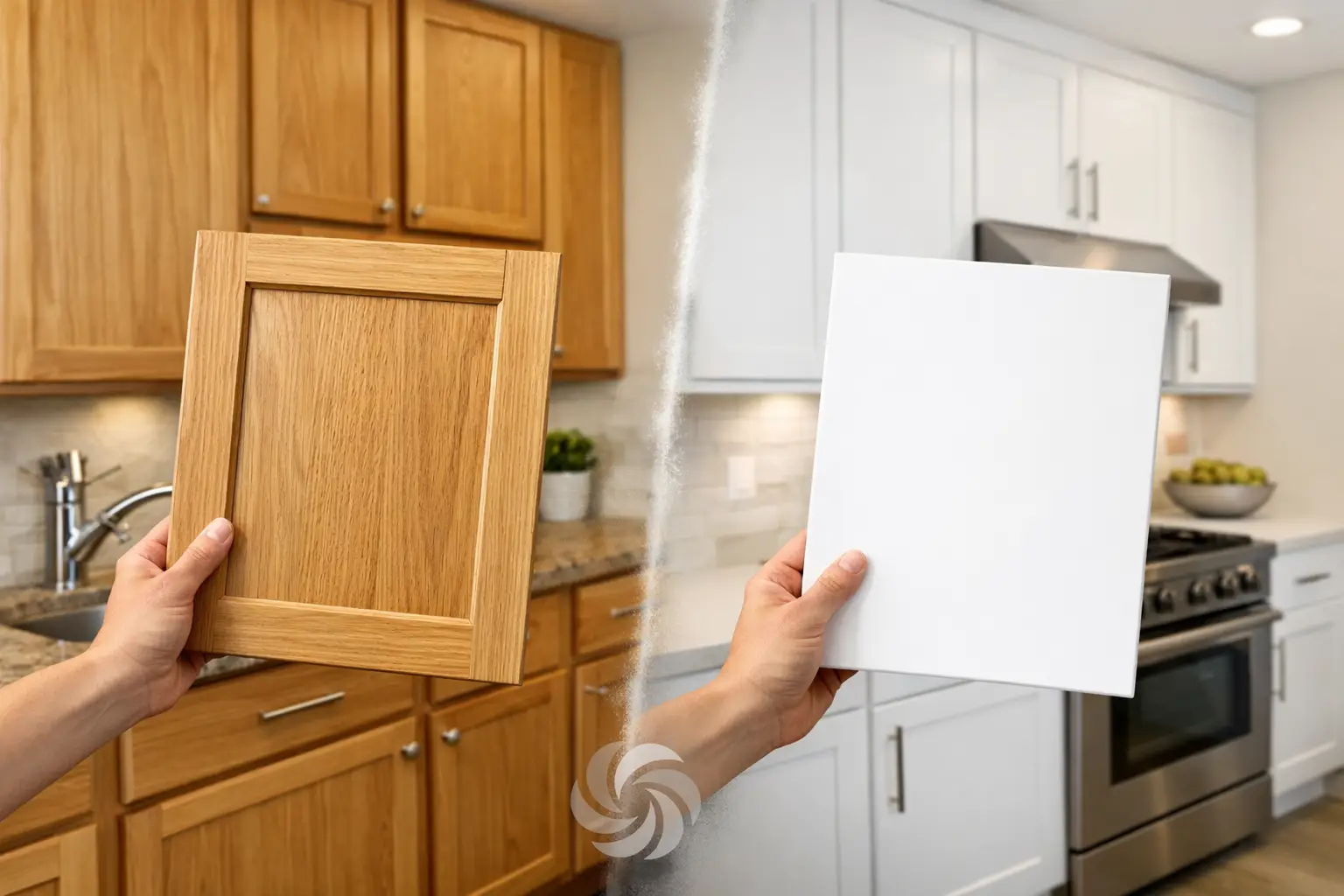
A kitchen can look worn out long before it stops working. Dated doors, peeling finishes, awkward storage, and tired hardware can make the room feel overdue for change. When homeowners weigh cabinet refacing versus replacement, the best choice usually comes down to one question: is the existing cabinet structure worth keeping?
Refacing can give a sound kitchen a new face at a lower cost and with less disruption. Replacement creates the opportunity to correct a poor layout, improve construction quality, and build storage around the way your household actually lives. Both can be smart investments. The right path depends on what is behind the doors, not just what is visible from across the room.
Cabinet Refacing Versus Replacement: The Core Difference
Cabinet refacing keeps the existing cabinet boxes in place. The visible exterior surfaces are covered with a new veneer or finish, while the doors, drawer fronts, and often the hardware are replaced. New handles, hinges, lighting, a countertop, or backsplash may also be added to complete the update.
Cabinet replacement removes the existing cabinets and installs new ones. This allows the kitchen to be redesigned from the inside out, including cabinet depth, drawer configurations, pantry storage, island size, appliance locations, and overall traffic flow.
The distinction matters because refacing is primarily a cosmetic and surface-level upgrade. Replacement is a functional renovation as well as a visual one. If your kitchen has a solid layout and sturdy boxes, refacing may be enough. If daily use exposes deeper problems, new cabinetry will usually deliver better value over time.
When Cabinet Refacing Makes Sense
Refacing is a practical option when cabinet boxes are structurally sound, level, and securely attached to the wall. Plywood or well-built cabinet boxes that have been cared for can often support new doors and drawer fronts for many more years.
It works especially well in kitchens where the layout already functions. Perhaps the sink, range, refrigerator, and prep areas are in the right places, but the oak doors feel dated or the finish no longer suits the rest of the home. Changing the door style and color can dramatically shift the appearance without requiring a full tear-out.
Refacing can also reduce renovation disruption. Since the cabinet boxes remain, there is less demolition and less time without a usable kitchen. For a rental property, apartment turnover, or commercial space with a limited closure window, that shorter schedule can be a meaningful advantage.
Still, refacing has limits. It cannot make shallow cabinets deeper, create a better corner solution, or turn a stack of fixed shelves into a modern drawer-based storage system without additional work. It also cannot correct boxes that are swollen from water damage, sagging, poorly built, or no longer aligned.
Refacing Is Best for a Strong Foundation
Before committing to refacing, inspect the cabinet interiors and bases carefully. Look under the sink, around the dishwasher, at cabinet corners, and along the toe kicks. Water staining, soft particleboard, delaminated surfaces, loose joints, and doors that no longer sit square may point toward replacement instead.
A professional assessment is useful because some issues are easy to hide with new doors. A fresh finish may look good on day one, but it will not solve a cabinet box that is failing under the weight of dishes, cookware, or a countertop.
When Cabinet Replacement Is the Better Investment
Replacement is usually the stronger choice when the kitchen layout is inefficient or the existing cabinets are low quality. Many older kitchens have limited drawer storage, narrow work areas, wasted corner space, and insufficient pantry capacity. A new cabinet plan can address these problems directly.
Replacement also makes sense when you are changing the footprint. Moving a wall, adding an island, relocating appliances, or opening the kitchen to another room requires cabinets designed for the new layout. Trying to adapt old boxes to a substantially different plan can create visible compromises and extra labor.
New cabinetry gives you a chance to choose materials and details based on long-term use. Solid plywood construction offers better strength and moisture resistance than many older particleboard boxes. Full-extension drawers, soft-close hardware, pull-out organizers, deep pot drawers, recycling centers, and tall pantry units can make the kitchen easier to use every day.
For homeowners planning to stay in the home, replacement is often worth considering as a long-term improvement rather than simply a visual refresh. Quality you can see and feel is not limited to the door finish. It shows up when drawers glide smoothly, cabinets stay aligned, and storage works without constant rearranging.
Replacement Solves Problems Refacing Cannot
A few signs point clearly toward replacement: repeated water damage, cabinet boxes that flex or crumble, shelves that sag, poor access to corner cabinets, and a layout that causes congestion around appliances. Replacement is also the more dependable option when you want a heavier countertop material and need to confirm the cabinet bases can support it properly.
If your current kitchen lacks enough storage, be specific about what is not working. Is there nowhere for small appliances? Do baking sheets disappear behind stacked cookware? Are groceries scattered between several cupboards? Those answers help shape a cabinet plan with smart storage instead of simply adding more cabinets wherever space allows.
Cost, Timeline, and Value: What to Expect
Refacing generally costs less than full replacement because it preserves the cabinet boxes and reduces demolition and installation work. The exact difference depends on the number of cabinets, door material, finish, hardware, countertop changes, and any repairs needed before refacing begins.
Replacement has a higher upfront cost, but it includes more opportunity to improve the kitchen. The budget may involve new cabinets, demolition, installation, countertop work, backsplash, plumbing or electrical adjustments, and finishing around the new layout. A clear estimate should separate these elements so you understand where the investment is going.
Neither option is automatically the better value. Refacing can be the right financial decision when it extends the life of high-quality cabinet boxes and delivers the look you want. Replacement can be the better value when refacing would leave you with the same storage frustrations, weak construction, or compromised layout.
Timelines also differ. Refacing is often faster, particularly when no major countertop, appliance, plumbing, or electrical work is involved. A full replacement takes more coordination, but careful layout planning, cabinet production, precise installation, and a final inspection help keep the project organized. The goal is not just speed. It is a finished kitchen with clean alignment, dependable operation, and no surprises late in the process.
How to Make the Decision With Confidence
Start by separating your wants from your problems. Wanting a lighter color or a more current door profile may point toward refacing. Needing more workspace, better organization, a larger pantry, or a new island may point toward replacement.
Next, consider the age and condition of the cabinet boxes. If they are solid, level, and made from durable materials, refacing deserves a serious look. If they are moisture damaged, thin, unstable, or poorly configured, putting new doors on them may only delay a larger renovation.
It is also helpful to think beyond the cabinet line. A new countertop, backsplash, flooring, or appliance package can change the scope of the project. In some kitchens, refacing fits neatly into those updates. In others, new cabinetry creates the cleanest result because dimensions, finishes, and installation details can be planned together.
For Winnipeg homeowners, seasonal schedules and family routines can matter as much as design. A straightforward refacing project may suit a tight turnaround. A full replacement may be the better choice when you can plan ahead and want to make the kitchen work better for years. An experienced cabinet team can assess the existing boxes, measure the space, discuss material options, and provide an estimate that matches the real scope of work.
The strongest decision is the one that respects both the kitchen you have and the way you want to use it next. Bring photos, measurements, and a short list of daily frustrations to a design consultation. That preparation makes it much easier to choose a practical update now or invest confidently in cabinetry built for the long run.