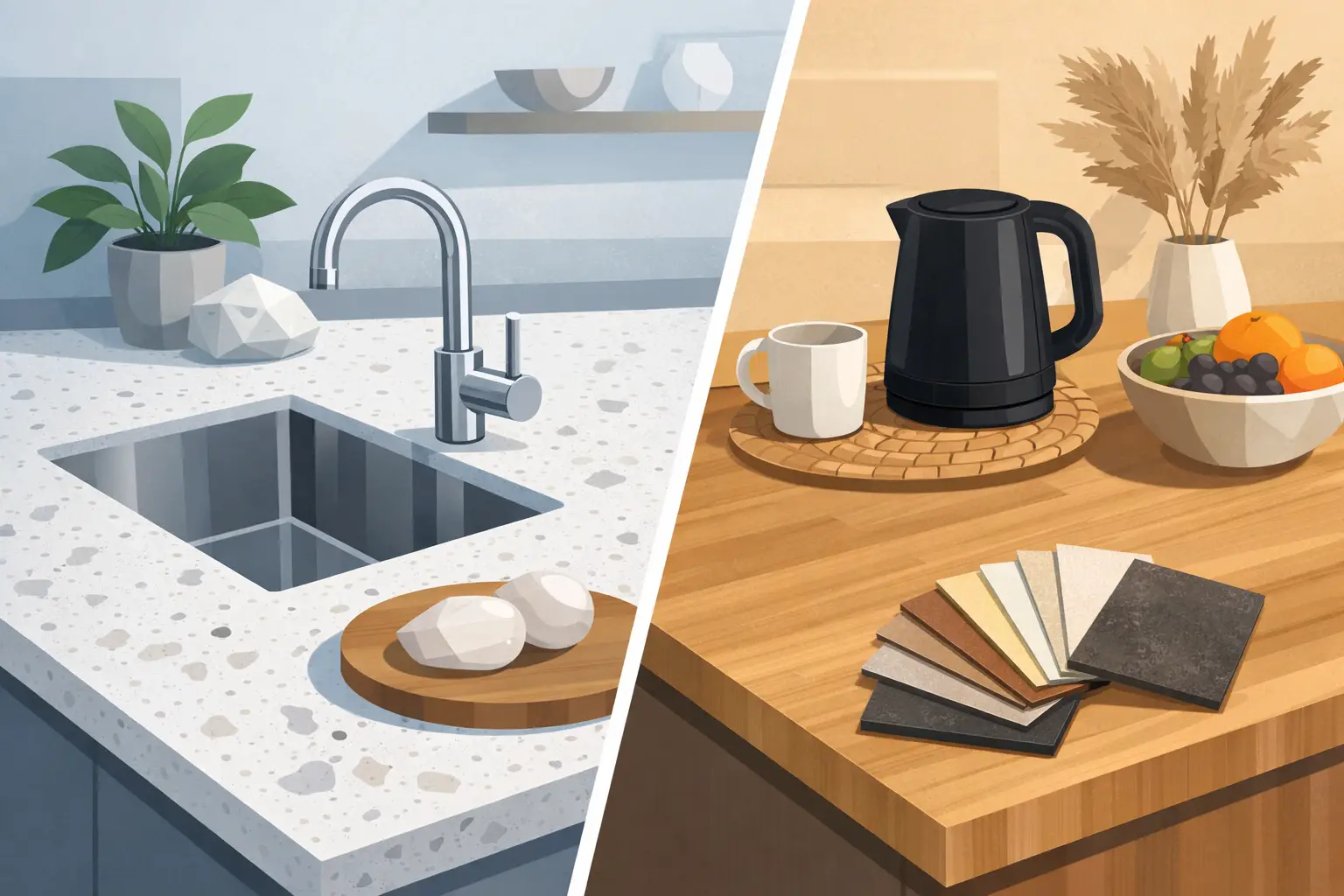
A countertop decision can change the entire feel of a kitchen, but it also affects the renovation budget, maintenance routine, and long-term durability. When comparing quartz versus laminate countertops, the right choice is rarely about choosing the “best” material overall. It is about choosing the surface that suits how your household cooks, cleans, entertains, and plans to use the space over time.
For some Winnipeg homeowners, quartz is the finishing detail that makes a new kitchen feel permanent and polished. For others, laminate creates room in the budget for better cabinet construction, smarter storage, or a more complete renovation. Both can look excellent when selected thoughtfully and installed with care.
Quartz Versus Laminate Countertops: The Main Difference
Quartz is an engineered stone surface made from crushed natural quartz combined with resins and pigments. It is dense, nonporous, and manufactured in slabs, giving it a substantial look and feel. Modern quartz comes in a wide range of colors and patterns, from soft solid whites to veining that resembles natural stone.
Laminate is a decorative surface bonded to a composite core. The visible top layer is a high-pressure material printed with a color, pattern, or texture. Today’s laminate choices go well beyond the shiny, dated patterns many homeowners remember. Matte finishes, realistic stone looks, warm wood tones, and clean solid colors can create a current, well-designed kitchen at a much lower material cost.
The difference is most noticeable in weight, edge detail, heat resistance, and price. Quartz is a premium material with greater resilience against daily wear. Laminate is a budget-conscious, versatile choice that performs well when it is protected from excessive heat, standing water, and sharp impacts.
Cost: Where the Budget Gap Begins
Quartz generally costs more than laminate because of the material, fabrication, delivery, and professional installation required. Slabs must be precisely measured, cut, transported, and fitted around sinks, cooktops, walls, and backsplashes. The final price also changes with the color, thickness, edge profile, and number of seams.
Laminate is usually one of the most affordable countertop options. It offers predictable pricing and can make a substantial difference in a renovation budget, especially in larger kitchens, rental units, secondary suites, or multi-unit projects. A lower countertop cost may allow you to invest in features homeowners use every day, such as full-extension drawers, pull-out pantry storage, soft-close hardware, or durable plywood cabinet boxes.
That does not mean laminate is always the economical choice over the full life of the kitchen. If a countertop is damaged by heat or moisture, replacement may be needed sooner. Quartz costs more upfront, but its durability can make it a better long-term value for a busy family kitchen or a home where resale presentation matters.
Durability in Everyday Kitchen Use
Quartz is highly resistant to stains, scratches, and moisture. Because it is nonporous, common kitchen spills such as coffee, oil, tomato sauce, and juice are less likely to soak into the surface. It does not need routine sealing, which keeps maintenance simple.
However, quartz is not indestructible. Heavy impact near an edge can chip it, and direct high heat can damage the resin binders or leave discoloration. A hot pan should still go on a trivet, not directly on the counter. This small habit protects a significant investment.
Laminate handles normal daily use well, especially when paired with good kitchen habits. It resists many stains and is easy to wipe clean. Its main vulnerabilities are high heat, cuts, and water exposure at seams or around the sink. Setting a hot baking sheet on laminate can blister or scorch the surface, while repeated moisture at an unsealed edge can cause the core to swell.
For households that cook often, quartz provides more margin for error. For lighter-use kitchens, offices, apartments, or homeowners who are comfortable using cutting boards and trivets, laminate can remain attractive and functional for many years.
Cleaning and Maintenance Requirements
Both materials are relatively simple to clean, but quartz has the easier long-term care routine. A soft cloth, warm water, and mild dish soap are usually enough for day-to-day cleaning. Avoid abrasive pads and harsh chemical cleaners, especially products designed for ovens or drains.
Laminate also cleans easily with a soft cloth and mild cleaner. The key is not allowing water to sit at joints, backsplash seams, or sink cutouts. Wiping up spills promptly is particularly important around the faucet, where repeated moisture can work its way into vulnerable edges.
Neither material should be treated as a cutting surface. Knives can scratch laminate and may dull quickly on quartz. A cutting board protects the countertop and makes food preparation more practical.
Appearance: Stone Depth or Flexible Design
Quartz offers a depth and consistency that is difficult for laminate to duplicate. It can create a clean, upscale focal point in kitchens with flat-panel cabinets, painted shaker doors, or wood-grain finishes. A quartz backsplash in the same material can also provide a tailored, low-maintenance look with fewer grout lines to clean.
Laminate offers more visual flexibility than many buyers expect. It can coordinate with nearly any cabinet color and can be a strong fit for Scandinavian-inspired kitchens, warm modern spaces, practical laundry rooms, and compact condo kitchens. A matte laminate in a soft neutral tone can look especially refined when paired with precise cabinet alignment, quality hardware, and a simple backsplash.
Edge detail affects the final result. Quartz can be shaped into eased, beveled, or more decorative profiles, depending on the selected slab thickness and design. Laminate edges are more limited, but modern post-formed and square-edge options create a clean appearance. The best choice is one that matches the cabinet style and the level of visual detail planned for the room.
Installation Matters as Much as the Surface
A countertop is only as good as the support below it. Cabinets must be level, securely installed, and properly prepared before measurements are finalized. This is particularly important with quartz, which is heavy and requires accurate templating after the cabinets are in their final position.
Laminate is lighter and can be faster to install, but precise fitting still matters. Tight sink cutouts, clean wall scribing, finished edges, and properly sealed seams prevent the small gaps that can shorten its service life. A countertop should look intentional from every angle, not simply placed on top of the cabinets.
An organized renovation process reduces surprises. Cabinet layout, appliance specifications, sink choice, backsplash thickness, and countertop overhangs should be reviewed early so that every component fits together correctly. This is where working with one team for design, cabinetry, countertop coordination, and installation can make the project easier to manage.
When Quartz Is Worth the Investment
Quartz is often the better fit when the kitchen is a high-use gathering space, when maintenance needs to stay minimal, or when the renovation is intended to add lasting value to the home. It is also a strong choice for homeowners who want a stone-inspired look without the regular sealing associated with some natural stone materials.
Choose quartz when you value a substantial finished feel, expect frequent cooking and entertaining, and have room in the budget after addressing the fundamentals of cabinetry, storage, lighting, and installation. A beautiful countertop cannot compensate for poorly planned cabinets, but a well-planned kitchen can make quartz feel like a worthwhile final layer.
When Laminate Makes the Most Sense
Laminate is a smart choice when keeping the renovation budget controlled is a priority. It works well in starter homes, rental properties, basement suites, offices, laundry rooms, and kitchens where the cabinets or layout need the larger share of the investment.
It is also a practical option for homeowners who want a fresh, coordinated look without paying for premium stone fabrication. With the right color, edge treatment, sink installation, and backsplash, laminate can look clean and current while leaving room for quality you can see and feel in the cabinet construction.
The most dependable countertop choice is the one that supports the whole project. Before selecting a sample, consider your cooking habits, the condition of the existing layout, the lifespan you expect from the kitchen, and where your renovation dollars will improve daily use most. A free design consultation with Emcab Kitchens can help put those decisions in the right order, so the finished space feels considered, durable, and free of unnecessary surprises.