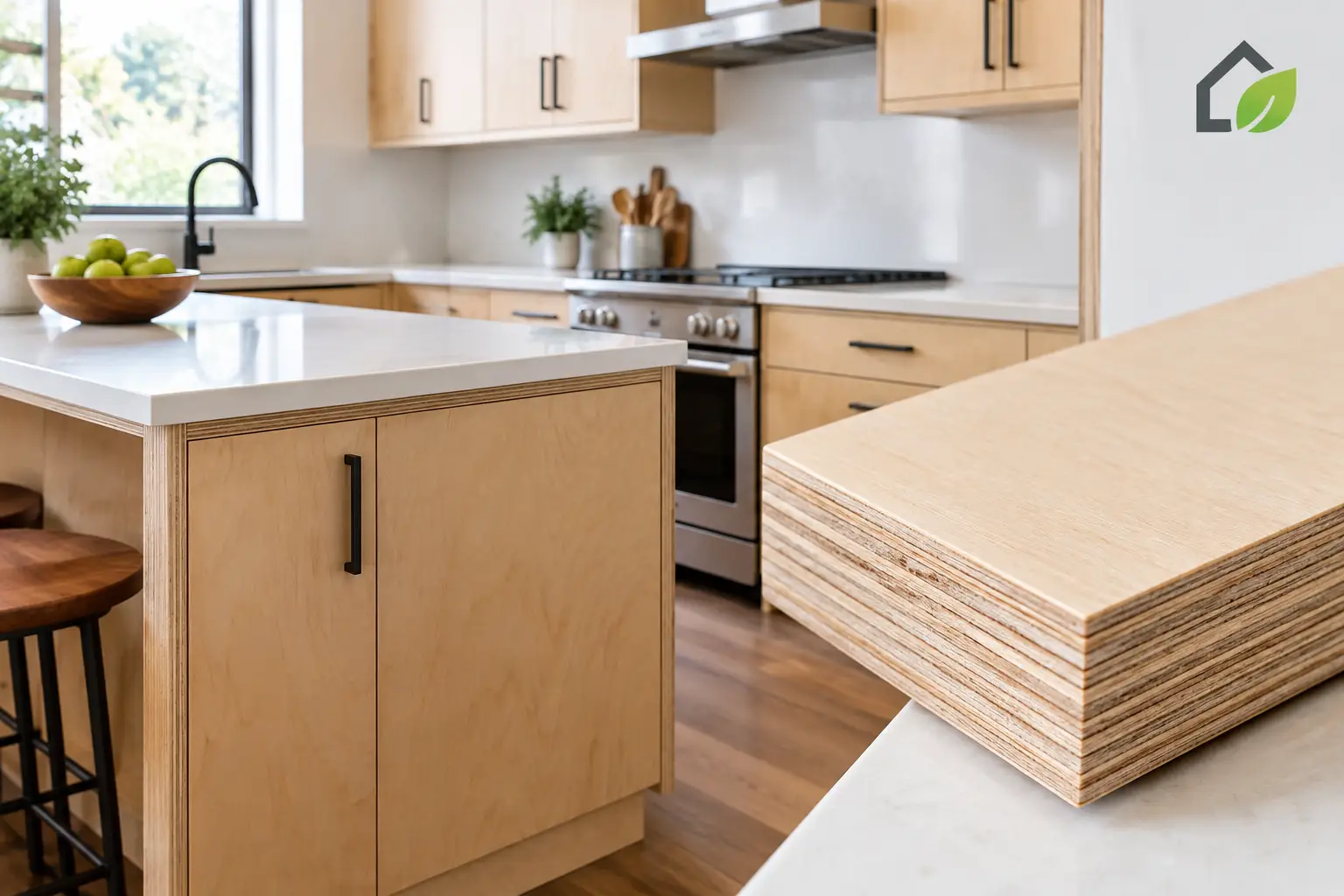
A cabinet can look polished on installation day and still disappoint a few years later if its box construction, edges, hardware, or installation were treated as afterthoughts. This plywood cabinet durability review focuses on what homeowners can expect from plywood cabinets in real kitchens – where steam, spills, heavy cookware, busy drawers, and seasonal humidity put every component to work.
For many kitchen renovations, plywood is a practical step up in cabinet-box construction. It offers dependable strength, holds fasteners well, and performs better around occasional moisture than many particleboard alternatives. But plywood alone is not a lifetime guarantee. The grade of the panels, the way components are joined, the finish applied, and the precision of the installation all determine whether cabinets remain solid, aligned, and easy to use.
Why Plywood Performs Well in Cabinet Boxes
Plywood is built from thin layers of wood veneer bonded together with alternating grain directions. That cross-layered construction helps reduce the seasonal expansion, contraction, and sagging that can affect less stable sheet materials. In cabinet construction, this matters most in the areas that carry daily loads: side panels, bottoms, shelves, drawer supports, and hanging rails.
A well-built plywood cabinet box has the stiffness needed to support dishes, cookware, small appliances, and pantry staples without feeling flimsy. It also gives screws a stronger grip. Hinges, drawer-slide screws, and cabinet-to-wall fasteners have more material to bite into, which helps preserve alignment as cabinets are used over time.
That does not mean every plywood panel is identical. Thickness, veneer quality, core construction, and adhesive quality vary. A cabinet made with solid plywood construction should use appropriate panel thicknesses for the job, especially for wide shelves, tall pantry units, and heavily loaded base cabinets. Thin panels can still bow under weight, no matter what material they are made from.
Plywood Cabinet Durability Review: Where It Counts
The biggest advantage of plywood is not simply that it is wood-based. Its real value is how it handles the demands placed on a cabinet box over years of use. A kitchen is a working space, not a showroom, and durability comes down to performance in a few critical areas.
Weight and shelf strength
Base cabinets do the hardest work in a kitchen. They support countertops, cookware, dishware, pull-out storage, and often a sink or cooktop. Plywood sides and bottoms provide a stable structure for these loads when they are correctly sized and securely joined.
Shelves deserve a closer look, particularly in pantries and wide upper cabinets. A long shelf carrying canned goods or stacks of plates can deflect over time if it is too thin or unsupported. In a smart cabinet plan, shelf spans are considered early, with dividers, thicker material, or adjustable support positions used where needed.
Moisture resistance
Plywood is more forgiving around moisture than particleboard, but it is not waterproof. A dishwasher leak, a failed sink seal, or standing water beneath a cabinet can damage almost any wood-based material if left unaddressed. The difference is that quality plywood is generally less likely to swell dramatically from a brief spill or humid condition.
The vulnerable points are usually exposed edges, seams, sink-base cutouts, and the floor area behind toe kicks. Durable cabinets need properly finished surfaces and protected edges, especially around the sink and dishwasher. Homeowners should still wipe up leaks quickly and investigate recurring moisture rather than assuming cabinet material will solve a plumbing problem.
Fastener holding and daily movement
Cabinet doors and drawers create constant movement. A door may open and close thousands of times, while a wide pot drawer can carry considerable weight every day. Plywood provides reliable screw-holding strength, helping hinges and slides stay firmly anchored when quality hardware is installed correctly.
Hardware matters as much as the box. Soft-close hinges and full-extension drawer slides should be selected for the door size and drawer load, then adjusted precisely during installation. Premium hardware cannot compensate for a weak cabinet structure, but a strong plywood box paired with properly rated hardware creates the smooth, solid feel homeowners notice immediately.
Cabinet Construction Is More Than the Panel Material
When comparing cabinetry, ask what the cabinet box is made from, but do not stop there. The best material can be undermined by rushed assembly or poor installation. Look for clean joinery, square boxes, secure backs, reinforced mounting areas, and consistent edge treatment.
A cabinet box must remain square to keep doors and drawers operating properly. If it twists during transport, is installed against an uneven wall without proper shimming, or is fastened poorly, gaps can become uneven and drawers may not close as intended. Precise installation protects the investment already made in the cabinet material.
Back panels and wall-mounting systems are especially important for upper cabinets. These units need to support their own weight plus dishes, glassware, and other stored items. A dependable installation uses secure fastening into suitable wall framing, careful leveling, and alignment across the complete run of cabinets. This is not the place for shortcuts.
Finish Quality Protects the Surface You Touch Every Day
A cabinet finish is both visual and functional. It protects surfaces from fingerprints, cooking residue, cleaning, and routine contact. Durable finishes should be evenly applied, smooth to the touch, and appropriate for the door style and material selected.
Keep in mind that the cabinet box, door, and drawer front do not always use the same material. Plywood is an excellent choice for cabinet boxes, while doors may be made from a variety of materials depending on the desired style, paint finish, grain pattern, and budget. This is normal. The key is choosing materials intentionally rather than assuming a single label describes the entire cabinet.
For everyday care, use a soft cloth and mild cleaner. Avoid abrasive pads, harsh solvents, and excessive water around seams and edges. A good finish can handle normal kitchen use, but aggressive cleaning habits can dull or wear it prematurely.
The Trade-Offs Homeowners Should Know
Plywood cabinetry typically costs more than basic particleboard cabinet construction. That higher cost reflects the material itself, as well as the value of stronger boxes, better fastener holding, and improved moisture tolerance. Whether it is the right investment depends on the kitchen, the expected length of ownership, and how heavily the space will be used.
For a rental unit with a tightly controlled budget, a carefully selected cabinet system may prioritize straightforward replacement and efficient installation. For a family kitchen, a long-term home, or a high-use multi-unit application, plywood boxes can make more sense because they are better prepared for frequent loading, hardware movement, and minor moisture exposure.
Plywood also has visual variation within its internal layers and can have voids in lower-quality sheets. Those hidden gaps may weaken an edge or reduce consistency in certain applications. This is why workmanship and material selection should be discussed together. Asking for plywood without asking about panel quality, thickness, edge protection, and construction details leaves too much unanswered.
What to Ask Before Ordering Cabinets
A clear cabinet conversation should cover how the boxes are built, where plywood is used, and how the cabinets will be supported and installed. Ask about the thickness of cabinet sides and shelves, the hardware brand and load rating, moisture protection around sink bases, and how doors and drawers will be adjusted after installation.
It is also worth asking who is responsible for measurement, delivery, installation, cleanup, and final inspection. Cabinet durability begins before production, with accurate planning that accounts for uneven floors, wall conditions, appliances, plumbing, and countertop requirements. One accountable team can identify these details before they become costly changes.
At Emcab Kitchens, solid plywood construction is paired with practical layout planning, premium finishes, soft-close hardware, and precise installation. That approach is designed for homeowners who want quality they can see and feel, along with clear timelines and no surprises around the work.
The right cabinet choice should feel reassuring long after the renovation is finished. Focus on the full build – material, construction, hardware, finish, and installation – then choose a cabinet plan that fits the way your kitchen is actually used.