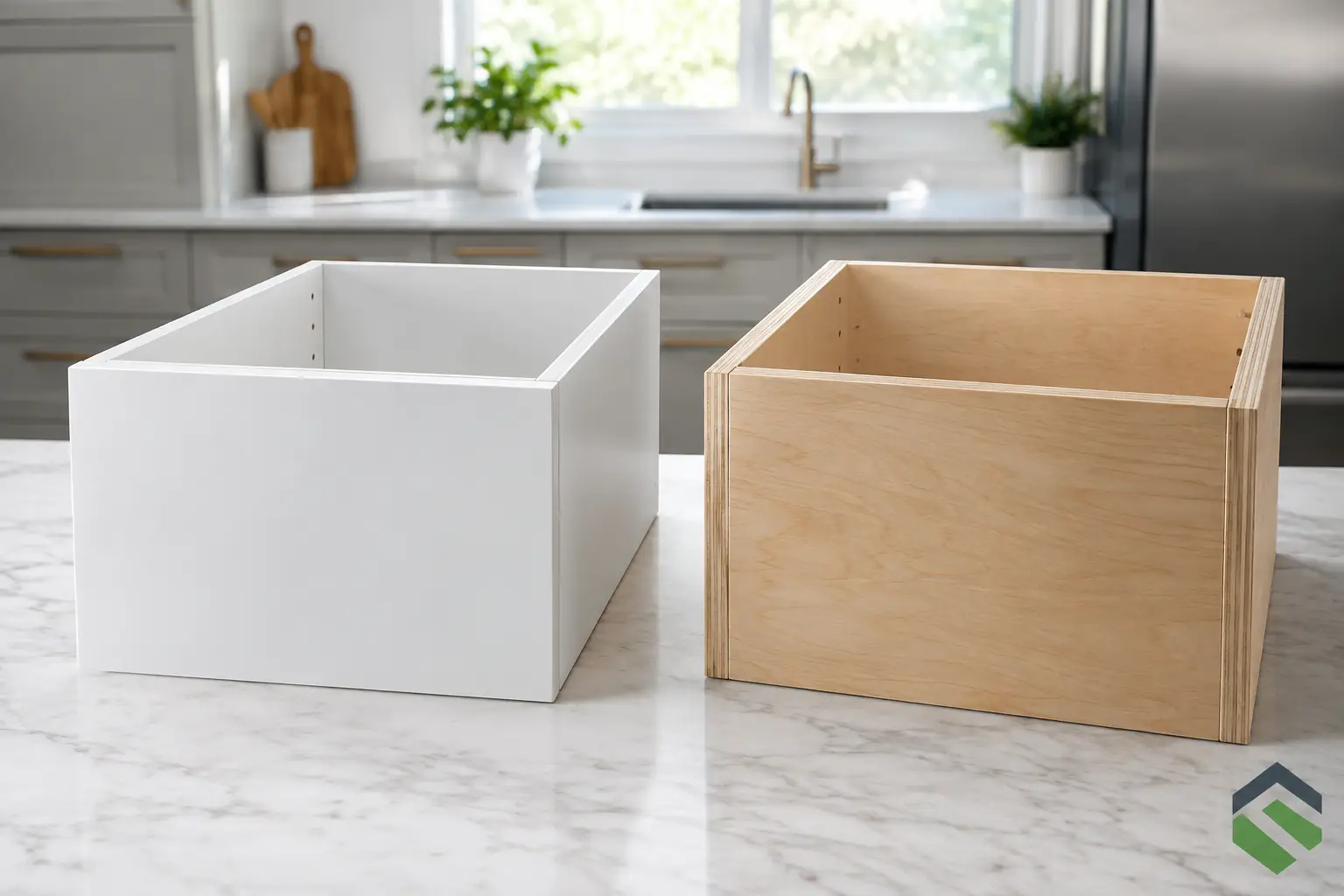
A cabinet door can make a kitchen look finished, but the box behind it determines how that kitchen performs for years. When homeowners compare melamine versus plywood boxes, they are usually trying to answer a practical question: where should the budget go for a cabinet that will handle daily use, moisture, heavy dishes, and repeated opening and closing?
The right answer depends on the room, the cabinet design, and the level of use. Melamine can be a sensible choice in the right application. Plywood is often the stronger long-term foundation for kitchen cabinet construction, especially where durability and dependable hardware performance matter most. The key is understanding what each material actually is and how the cabinet is built around it.
What Is a Melamine Cabinet Box?
In cabinetry, melamine usually refers to a particleboard or MDF core covered with a hard, factory-applied decorative surface. The surface is smooth, easy to clean, and commonly white, though many colors and wood-look finishes are available. It is a familiar material in cabinet interiors because it creates a bright, wipeable surface without requiring paint or a separate finish.
A well-made melamine cabinet box can look clean and perform reliably in dry areas. It is also cost-efficient, which can make it attractive for rental units, closets, offices, and projects with a tightly controlled budget.
The limitation is the core. Standard particleboard is made from wood particles and resin pressed into a panel. It does not handle prolonged water exposure as well as plywood. If water enters through a damaged edge, loose fastener hole, sink leak, or failed seam, the core can swell. Once it swells, it generally will not return to its original shape.
Melamine panels also rely heavily on proper edge banding. The broad face of the panel is protected, but cut edges need a durable finished edge to help keep moisture out and provide a clean appearance.
What Is a Plywood Cabinet Box?
Plywood is made from thin layers of wood veneer bonded together with the grain direction alternating from layer to layer. This layered construction gives plywood strength, dimensional stability, and better resistance to splitting around screws than standard particleboard.
For kitchen cabinet boxes, plywood is often paired with a durable finished interior surface. That means the comparison is not always as simple as a plain wood box versus a white melamine box. A quality plywood cabinet can have a clean, easy-to-maintain interior while still gaining the structural advantages of a plywood core.
Solid plywood construction matters where cabinets carry concentrated weight: deep drawers filled with cookware, wide base cabinets, pantry pullouts, wall cabinets loaded with dishes, and sink bases that may face plumbing leaks. It also gives installers a more dependable material for fastening cabinets securely and making the precise adjustments that create aligned doors, level runs, and consistent reveals.
Melamine Versus Plywood Boxes: The Differences That Matter
Moisture resistance
Neither material should be treated as waterproof. A leaking dishwasher, failed supply line, or overflowing sink should be addressed quickly no matter what type of cabinet is installed.
That said, plywood typically provides more forgiveness when moisture is discovered and corrected promptly. Quality plywood may show staining or require repair after a significant leak, but it is less likely than particleboard to expand dramatically at an exposed edge. This is especially valuable around sinks, dishwashers, laundry areas, and bathroom vanities.
The finish and construction details still matter. Sealed edges, properly fitted backs, accurate cutouts, and careful plumbing installation all help protect a cabinet box from unnecessary water damage.
Strength and hardware holding
Kitchen cabinets do more work than most people realize. Drawer slides transfer weight to the cabinet sides. Hinges are opened thousands of times. Adjustable shelves carry stacks of plates, small appliances, and pantry items. Screws need a material that can hold securely over time.
Plywood generally offers stronger screw-holding performance and a better margin for demanding storage systems. It is particularly well suited to full-extension drawers, soft-close hardware, pullout organizers, and larger cabinet configurations. The result is quality you can see and feel each time a drawer closes smoothly or a loaded shelf remains supported.
Melamine boxes can support quality hardware when they are correctly engineered and assembled. However, they have less tolerance for stripped holes, repeated disassembly, or hardware adjustments after damage. In high-use kitchens, that difference can become more noticeable over the life of the cabinetry.
Weight and installation
Melamine panels are dense and heavy. Plywood is often lighter at a comparable thickness, which can make handling and installation easier, particularly for upper cabinets. Less weight is not just a convenience for the installation crew. It can also reduce stress during lifting, fitting, and securing cabinets to the wall.
Professional installation remains essential with either material. Cabinets need to be fastened into appropriate framing, leveled accurately, and joined so that doors and drawers operate as intended. Material quality and precise installation work together.
Appearance and maintenance
For cabinet interiors, both options can look polished. White melamine interiors are popular because crumbs, spills, and stored items are easy to see. The surface wipes clean quickly and gives cabinets a crisp, finished look.
Plywood brings a more substantial feel at exposed construction points, but the visual result depends on the chosen finish, edge treatment, and cabinet design. Most homeowners will notice door style, color, countertop selection, and hardware first. They will notice box construction later, when the kitchen has been used every day for several years.
Cost and long-term value
Melamine is typically the lower-cost option up front. That may be appropriate when a project needs functional cabinetry at a more economical price point, or when the cabinets will receive lighter use.
Plywood usually costs more because the panel itself is more expensive and it is often specified for higher-quality construction. The additional investment can be worthwhile when the goal is a long-lasting family kitchen, a home renovation intended to add value, or a commercial setting where downtime and repairs create larger costs.
The best value is not always the lowest cabinet quote. It is the cabinet package that fits the space, supports the planned storage, and avoids premature replacement caused by swelling, loose hardware, or worn-out drawers.
When Melamine May Be the Right Choice
Melamine cabinet boxes are not automatically a poor choice. They can be practical for a dry, low-traffic space, an office kitchenette, a rental property with a defined budget, or a secondary storage area. They also work well when the cabinet manufacturer uses quality panels, durable edge banding, dependable hardware, and sound assembly methods.
Before selecting melamine, ask where the cabinet will sit and what it will hold. A narrow upper cabinet holding glasses faces very different demands than a sink base beside a dishwasher or a pantry cabinet filled with bulk groceries.
When Plywood Is Worth Prioritizing
Plywood is a strong choice for homeowners who want cabinet boxes built for regular family use and long-term performance. It is especially worth considering for sink bases, wide drawer banks, large pantry systems, islands, heavy-use kitchens, and homes where the renovation is expected to last through many years of daily life.
At Emcab Kitchens, solid plywood cabinet construction supports the practical features homeowners ask for most: smart storage, soft-close hardware, sturdy drawers, and a finished installation that stays aligned. It also gives the design team more confidence when planning cabinets around real cooking habits rather than limiting the layout to what a lighter-duty box can handle.
Look Beyond the Panel Material
Choosing between materials is important, but cabinet quality is never determined by one label alone. Ask how the boxes are assembled, whether the backs are substantial, what type of drawer slides are included, how edges are finished, and how the cabinets will be installed. A detailed estimate should make those decisions clear, with no surprises about what is included.
A free design consultation is a useful time to discuss more than colors and door styles. Bring up heavy cookware, recycling bins, pantry storage, children using the kitchen, pets, leak-prone plumbing, and any areas that receive constant use. These details help shape a cabinet plan that matches your household instead of a generic specification.
The best cabinet box is the one that supports the way you live, fits the budget honestly, and gives you confidence each time you open a drawer. For a kitchen built to carry real daily use, plywood provides a dependable starting point.