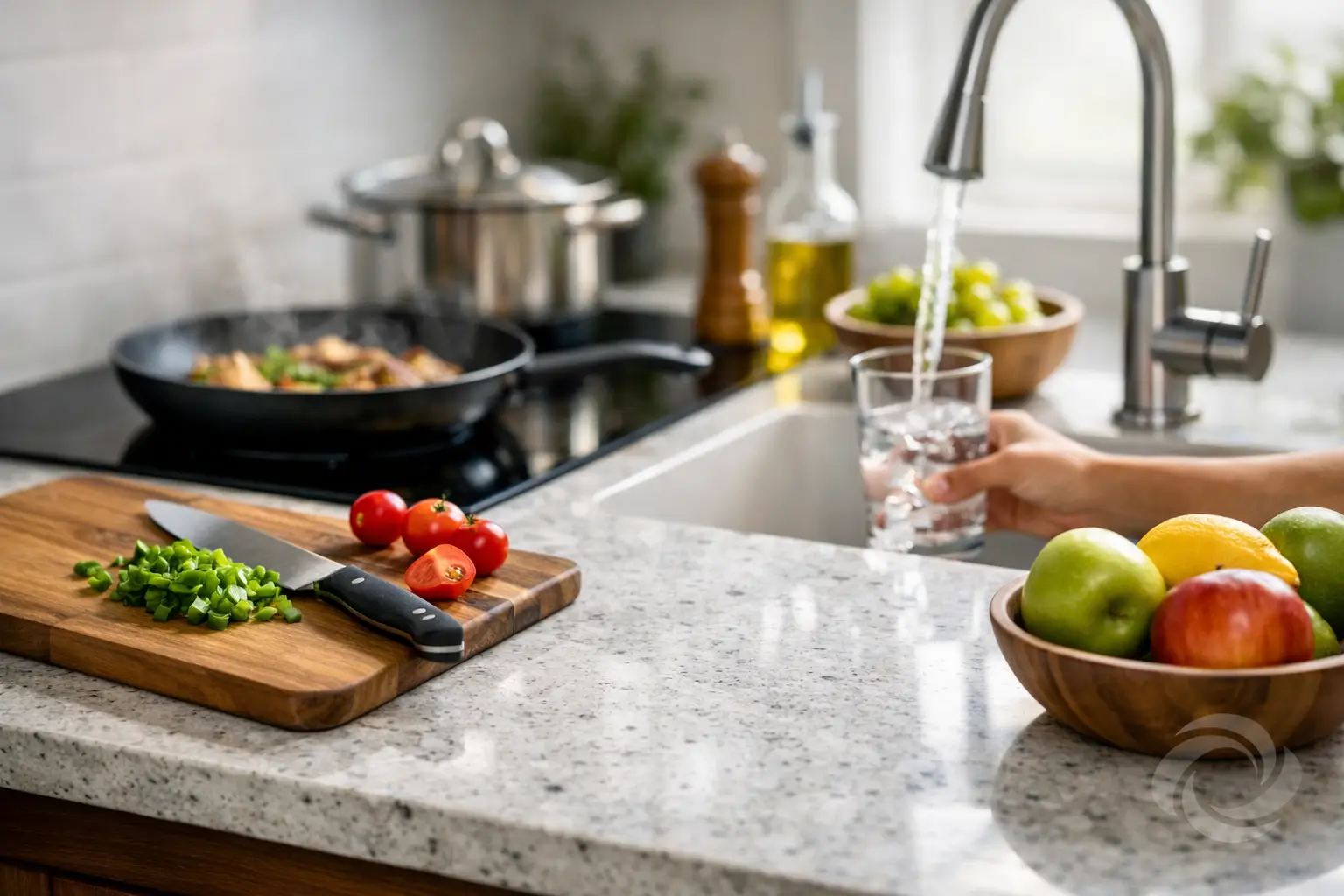
A countertop can look perfect in a showroom and still become the most frustrating surface in your home. The real test happens on a busy weeknight: hot pans near the stove, grocery bags by the sink, a child doing homework at the island, and the usual spills that do not wait for a convenient time. The right kitchen countertops should support that everyday use while fitting the cabinet layout, the room’s lighting, and the budget you have set for the renovation.
For most homeowners, the decision is not simply about choosing the prettiest slab. It is about finding a material that gives you the look you want without adding care requirements, repair concerns, or unexpected installation costs you did not plan for.
Start With How You Use the Kitchen
Before comparing samples, consider what happens in your kitchen from morning to night. A household that cooks frequently needs different performance from a countertop than a condo kitchen used mainly for quick meals and entertaining. A large island that serves as a prep area, dining table, and gathering place needs a surface that can handle more contact than a small perimeter counter.
Think about your tolerance for maintenance as well. Some materials need regular sealing or prompt cleanup to stay looking their best. Others are more forgiving but may show scratches, seams, or heat damage in different ways. There is no single best choice for every household. A good countertop selection matches the way you actually live, not just the photo that caught your attention online.
Your cabinets matter just as much. Countertops sit directly on their structure, and precise cabinet leveling is essential for clean seams, stable overhangs, and a polished finished appearance. Well-built plywood cabinets and professional installation provide a reliable base for heavier stone surfaces, wide islands, and integrated features such as waterfall edges.
Comparing Popular Kitchen Countertops
Each countertop material brings a distinct balance of durability, maintenance, appearance, and cost. Seeing full samples in the intended room is always worthwhile, since daylight, cabinet color, backsplash tile, and flooring can change how a surface reads.
Quartz: Consistent, Durable, and Low Maintenance
Quartz is a popular choice for renovated kitchens because it offers a refined stone-like appearance with consistent color and patterning. It is nonporous, so it does not require routine sealing, and it stands up well to everyday food preparation, spills, and staining.
That convenience makes quartz especially practical for busy households and rental or multi-unit projects where simple upkeep is a priority. It is not indestructible, however. Very high heat can damage the resin content, so hot pots and pans should go on a trivet rather than directly on the surface. Quartz also tends to be a premium investment, particularly when the design includes a large island, thick edges, or complex cutouts.
Granite: Natural Character With More Care
Granite provides natural variation that cannot be duplicated exactly. Every slab has its own movement, mineral flecks, and color shifts, which can make a kitchen feel personal and substantial. It handles heat well and has the strength needed for active cooking spaces.
The trade-off is that natural stone usually needs periodic sealing. Depending on the specific slab and finish, acidic foods and oils can stain or dull the surface if spills sit too long. Granite is an excellent option for homeowners who appreciate authentic natural materials and do not mind a little maintenance as part of long-term care.
Laminate: Budget-Friendly With Strong Design Options
Laminate has come a long way from the limited patterns many homeowners remember. Current options can imitate stone, concrete, wood, and clean solid colors at a much lower upfront cost than quartz or granite. It can be a smart choice when the renovation budget needs to cover cabinets, flooring, appliances, lighting, and installation at the same time.
Laminate is easy to clean and works well in many practical kitchens. Still, it is more vulnerable to scratching, scorching, and moisture damage at seams or edges. A damaged laminate top is generally harder to repair invisibly than stone. It performs best when homeowners use cutting boards, avoid placing hot cookware directly on the surface, and address damaged caulking promptly.
Solid Surface: Clean Lines and Repairable Details
Solid-surface countertops offer a smooth, uniform look with seams that can be less noticeable than many other materials. Because the material is nonporous, it is easy to clean and suitable for kitchens where hygiene and a simple visual finish are important. Minor scratches can often be refinished, which is a meaningful advantage over some alternatives.
It does have limits with heat and sharp impacts, so it is not the ideal surface for placing hot cookware directly from the oven. For homeowners who want a streamlined contemporary kitchen and value repairability, it can be a practical middle ground.
Butcher Block: Warmth That Requires Attention
Wood countertops bring warmth that stone and manufactured materials cannot fully replicate. They work especially well as an accent on an island, coffee station, or baking area alongside a more durable perimeter surface. A carefully planned mixed-material design can make the kitchen feel inviting without asking one surface to do every job.
Wood needs regular attention. It can scratch, dent, and react to standing water, and it typically requires oiling or resealing. For the right homeowner, that aging character is part of the appeal. For a household wanting the least possible maintenance, it may become a source of frustration.
Plan the Countertop and Cabinet Details Together
A countertop should never be selected in isolation. The edge profile, overhang, sink style, backsplash height, cabinet door color, and hardware finish all affect the final result. A busy veined quartz may look excellent with simple flat-panel cabinets but compete with a heavily detailed door style. A quiet, light-colored counter can brighten a smaller kitchen, while a darker surface can add contrast when paired with warm wood tones or pale cabinetry.
The sink decision deserves attention early in the process. Undermount sinks create a clean transition from counter to basin and make it easier to wipe crumbs and water into the sink. They require proper support and accurate fabrication. Drop-in sinks can be more economical and are often simpler to replace, but their rim remains visible on the countertop.
Overhangs also need planning. Standard seating overhangs at an island may need additional support depending on the countertop material, thickness, and depth. This is not a detail to leave until installation day. Proper brackets or concealed supports help protect the countertop and keep the seating area comfortable.
Do Not Overlook Fabrication and Installation
Even a high-quality slab can disappoint if measurements, cuts, and installation are handled poorly. Countertop work requires accurate templating after cabinets are installed and leveled. This helps ensure that walls, corners, sink openings, cooktop cutouts, and seams fit the actual space rather than an early drawing.
Installation should also be coordinated with the backsplash, plumbing, and appliance schedule. Typically, cabinets are set first, countertops are templated and fabricated, then the countertop is installed before the final sink and faucet connections are completed. Clear scheduling keeps a renovation moving and reduces the chance that one trade delays another.
At Emcab Kitchens, countertop planning is handled as part of the full kitchen renovation process, alongside cabinet layout, storage needs, finishes, delivery, and installation. That coordination helps homeowners avoid the common problem of trying to manage several suppliers while hoping every detail lines up.
Set a Budget That Accounts for the Whole Job
Material price is only one part of countertop cost. The total can also include measuring, fabrication, delivery, installation, sink and cooktop cutouts, edge details, removal of old counters, plumbing disconnection and reconnection, and backsplash work. A large slab with few cutouts may cost less to fabricate than a smaller kitchen with several angles, seams, and special details.
If the budget is tight, focus your investment where it will have the greatest daily value. You may choose a premium surface for a hardworking island and a more economical option elsewhere, or select a simpler edge profile and a readily available color rather than paying more for specialty fabrication. A clear estimate should make these choices visible before work begins, with no surprises added after the design is finalized.
Care Habits That Protect Your Investment
Most countertop damage comes from a few preventable habits. Use cutting boards instead of cutting directly on the counter, wipe spills promptly, and use trivets or hot pads for cookware. Avoid harsh abrasive cleaners unless the material manufacturer specifically recommends them. For natural stone and wood, follow the recommended sealing or conditioning schedule rather than waiting until the surface already looks worn.
It also helps to inspect the caulking around the sink and backsplash occasionally. Small gaps can let water reach areas where it does not belong, especially around laminate or wood-based products. Quick maintenance is far less disruptive than repairing water damage later.
The best countertop is one you can use confidently, clean easily, and enjoy seeing every day. Bring your cooking habits, style preferences, and realistic budget to the design conversation, then let the material choice follow the life your kitchen needs to support.